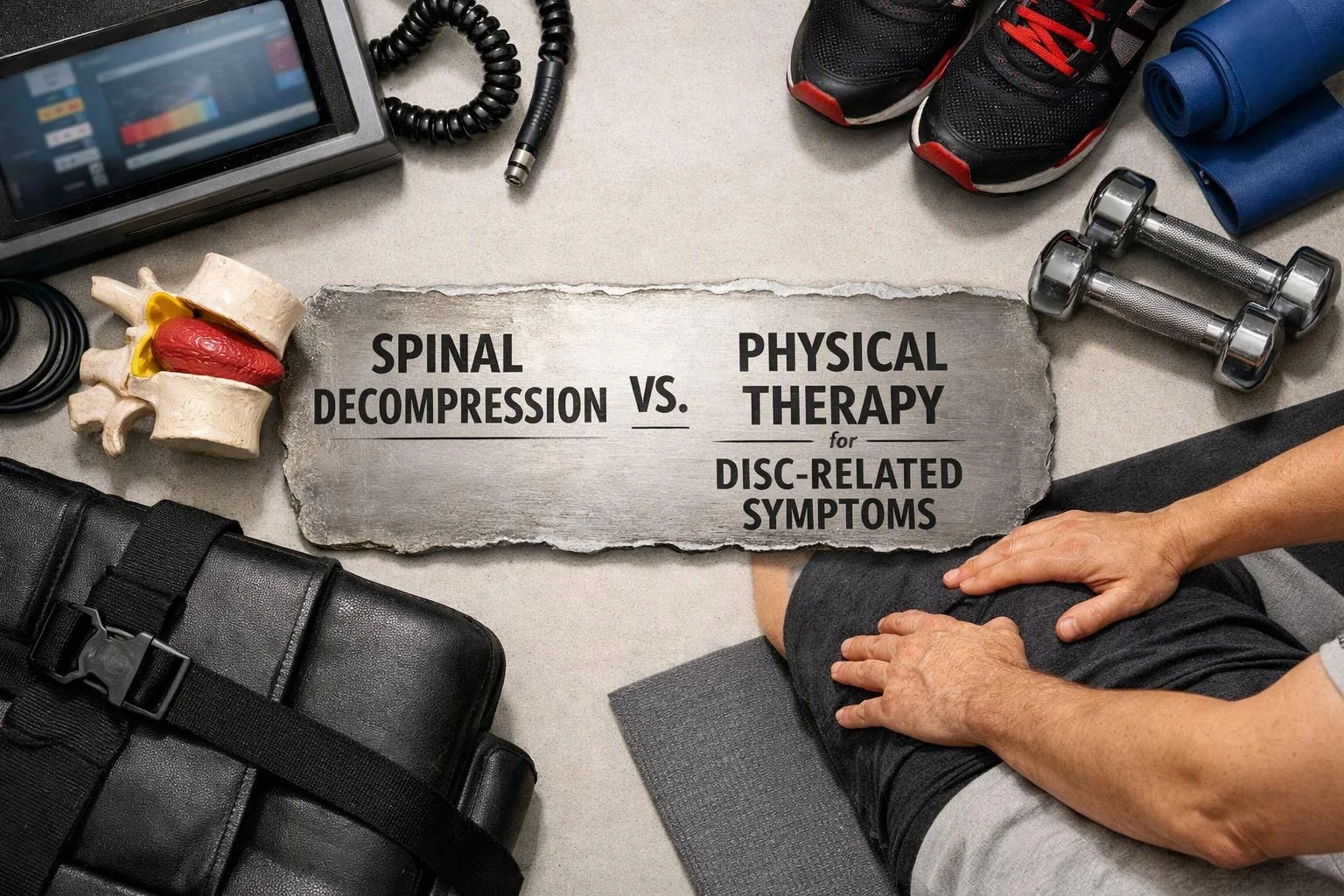
Spinal Decompression vs. Physical Therapy for Disc-Related Symptoms
Spinal decompression therapy and physical therapy can serve different roles for herniated disc and sciatica symptoms. Arrowhead Clinic Chiropractor Garden City reviews your pain pattern, examination findings, neurological symptoms, functional limits, and care goals before recommending the most appropriate starting point.
Request an EstimateHow Spinal Decompression and Physical Therapy Differ
Spinal decompression therapy focuses on controlled unloading of the spine, while physical therapy focuses on movement, strength, mobility, and functional recovery.
A herniated disc can irritate a spinal nerve and contribute to lower back pain, radiating leg pain, or sciatica. We use the clinical examination to connect the pain pattern with movement tolerance, strength, sensation, and daily activity limits.
Spinal decompression may aim to reduce mechanical stress on disc-related symptoms. Physical therapy may aim to improve body mechanics, posture, core strength, and confidence with movement.
Spinal Decompression vs. Physical Therapy: Quick Comparison
Neither option is universally better because the appropriate approach depends on the suspected pain source, neurological symptoms, functional limitations, examination findings, and response to care.
The comparison below shows how the two approaches differ in purpose, cost drivers, care timeline, maintenance, and best-fit situations.
| Factor | Spinal Decompression Therapy | Physical Therapy | Best-Fit Focus |
|---|---|---|---|
| Main goal | Controlled spinal unloading and symptom modulation | Movement, strength, mobility, and functional recovery | The approach that matches the examination findings |
| Cost drivers | Examination needs, care plan scope, and treatment frequency | Evaluation needs, exercise plan, visit scope, and treatment frequency | The services clinically appropriate for your condition |
| Care timeline | Progress is reviewed through symptom response and examination findings | Progress is reviewed through movement, strength, and function | The plan changes when the clinical response changes |
| Maintenance | May involve continued symptom monitoring and activity guidance | May involve home exercise, posture work, and activity modification | Long-term habits that support movement tolerance |
| Best for | Disc-related symptoms that appear mechanically sensitive | Strength, mobility, movement control, and activity limits | A focused or coordinated conservative care plan |
What Spinal Decompression May Help Address
Spinal decompression may be considered when disc-related back or radiating leg symptoms appear compatible with a mechanically sensitive spine and the clinical evaluation supports this approach.
A herniated disc or bulging disc can affect the space around a nerve root. That pressure may contribute to lower back pain, radiating leg pain, or sciatica. Our team checks whether your symptoms and examination findings fit a traction-based decompression approach.
Read more about our Spinal Decompression Therapy service to understand how this conservative care option may fit a broader treatment plan.
Advantages of Spinal Decompression Therapy
Spinal decompression therapy may offer a focused way to address disc-related pain while our team monitors your response.
Best for Spinal Decompression Therapy
Spinal decompression therapy may fit people with herniated disc symptoms when a chiropractic evaluation supports controlled unloading and symptom-focused care.
Our team also considers neurological findings, pain behavior, activity limits, and whether another form of care should be added.
What Physical Therapy May Help Address
Physical therapy may be useful when restoring movement, building strength, improving body mechanics, and returning to daily activities are central treatment goals.
Therapeutic exercise can address core strength, hip and back mobility, movement control, posture, and functional limitations. Our team looks at how symptoms respond to position, walking, lifting, sitting, and other daily tasks.
Physical therapy may also help people build confidence with gradual activity when weakness, stiffness, or poor movement tolerance affects functional recovery.
Advantages of Physical Therapy
Physical therapy supports active participation in recovery by linking treatment to movement and daily function.
Best for Physical Therapy
Physical therapy may fit people whose main needs involve functional recovery, movement-related symptoms, strength deficits, or difficulty returning to daily activities.
Home exercise can extend the goals of supervised care, but the plan should match your symptoms and clinical examination.
Which Option May Fit Herniated Disc or Sciatica Symptoms?
The better option depends on whether the evaluation points primarily to a mechanically sensitive disc-related condition, movement and strength deficits, or a need for coordinated care.
A herniated disc may cause nerve irritation without producing the same pain pattern in every person. Numbness, weakness, radiating leg pain, and changes in sensation deserve close attention during the clinical examination.
We use the physical examination and neurological screening to decide whether spinal decompression, physical therapy, or coordinated chiropractic care is a sensible starting point.
How We Evaluate the Right Starting Point
Arrowhead Clinic Chiropractor Garden City evaluates your history, symptoms, examination findings, and treatment goals before building a care plan.
What Changes the Cost of Care?
The cost of care depends on the evaluation required, the selected treatment approach, the scope of the care plan, and whether additional services are clinically appropriate; we explain pricing and how to request an exact quote.
For spinal decompression therapy, cost drivers may include examination needs, treatment frequency, symptom monitoring, and the overall scope of herniated disc treatment. For physical therapy, cost drivers may include the evaluation, therapeutic exercise needs, mobility work, home programming, and functional goals.
Insurance or payment considerations may also affect your out-of-pocket responsibility. We explain what the recommended care plan includes so you can request an exact quote before moving forward.
When Disc-Related Symptoms Need Prompt Medical Attention
Progressive weakness, significant loss of sensation, loss of bowel or bladder control, or saddle-area numbness requires prompt medical evaluation rather than relying on routine conservative care.
These red flag symptoms may indicate severe neurological involvement. If they appear or worsen, seek urgent medical evaluation before continuing routine chiropractic care or exercise-based treatment.
Our team can help identify concerning findings during screening, but urgent neurological symptoms require prompt medical attention.
Choose a Starting Point for Your Herniated Disc Symptoms
Arrowhead Clinic Chiropractor Garden City reviews your symptoms and examination findings to explain whether spinal decompression, physical therapy, or a coordinated approach is the most appropriate starting point.
Spinal decompression may suit mechanically sensitive disc-related symptoms, while physical therapy may suit strength, mobility, and functional recovery goals. We use your pain pattern, neurological screening, clinical examination, and response to care to shape the treatment plan.
Contact our team to discuss your symptoms and request an exact care estimate.
Questions About Spinal Decompression and Physical Therapy
Can physical therapy make a herniated disc worse?
Physical therapy can aggravate a herniated disc when exercises or activity levels do not match the person’s symptoms and examination findings. Arrowhead Clinic Chiropractor Garden City uses symptom response, strength, mobility, and neurological screening to guide movement and adjust the care plan.
Can spinal decompression help sciatica symptoms?
Yes, spinal decompression may help sciatica symptoms when the clinical evaluation supports a mechanically sensitive disc-related condition. The approach is not appropriate for every cause of leg pain, so we review the pain pattern, nerve irritation, strength, sensation, and other examination findings first.
Can spinal decompression and physical therapy be used together?
Yes, spinal decompression and physical therapy can be used together when the combined goals match the examination findings and care response. Decompression may address symptom modulation, while therapeutic exercise may address strength, mobility, posture, and functional recovery.
What symptoms suggest that a herniated disc needs medical evaluation?
Progressive weakness, severe neurological symptoms, loss of bowel or bladder control, or saddle-area numbness suggests that a herniated disc needs prompt medical evaluation. These red flag symptoms require urgent attention instead of relying only on routine conservative care.
Related Resources
Sports Injury Symptoms: A Checklist Before Returning to Activity
What's RequiredWork-Related Back or Neck Pain: What to Track Before an Evaluation
What's RequiredSciatica Symptoms: What to Track and When to Seek Care
What Goes With ItChiropractic Adjustment and Spinal Decompression: When Are Both Needed?