Work-Related Back or Neck Pain: What to Track Before an Evaluation
Work-related back or neck pain is easier to evaluate when you track when symptoms began, where they occur, what activities trigger them, how they change, and which warning signs appear; Arrowhead Clinic Chiropractor Garden City uses that information to guide work injury treatment and physical therapy decisions.
Request an EstimateWhy Work Activities Can Cause Back or Neck Strain
Yes, work activities can cause back or neck strain when lifting, reaching, twisting, prolonged positioning, or repeated force places stress on muscles, joints, discs, or other soft tissues.
Work-related injury can involve a sudden event, such as pain after lifting, or gradual repetitive strain from the physical workload. Awkward posture, repeated motion, and limited movement can affect the lower back, upper back, neck, shoulders, arms, or legs.
We connect the symptom onset to the work task that came before it. That connection helps our team decide which movements, tissues, and functional changes need closer attention during a clinical evaluation.
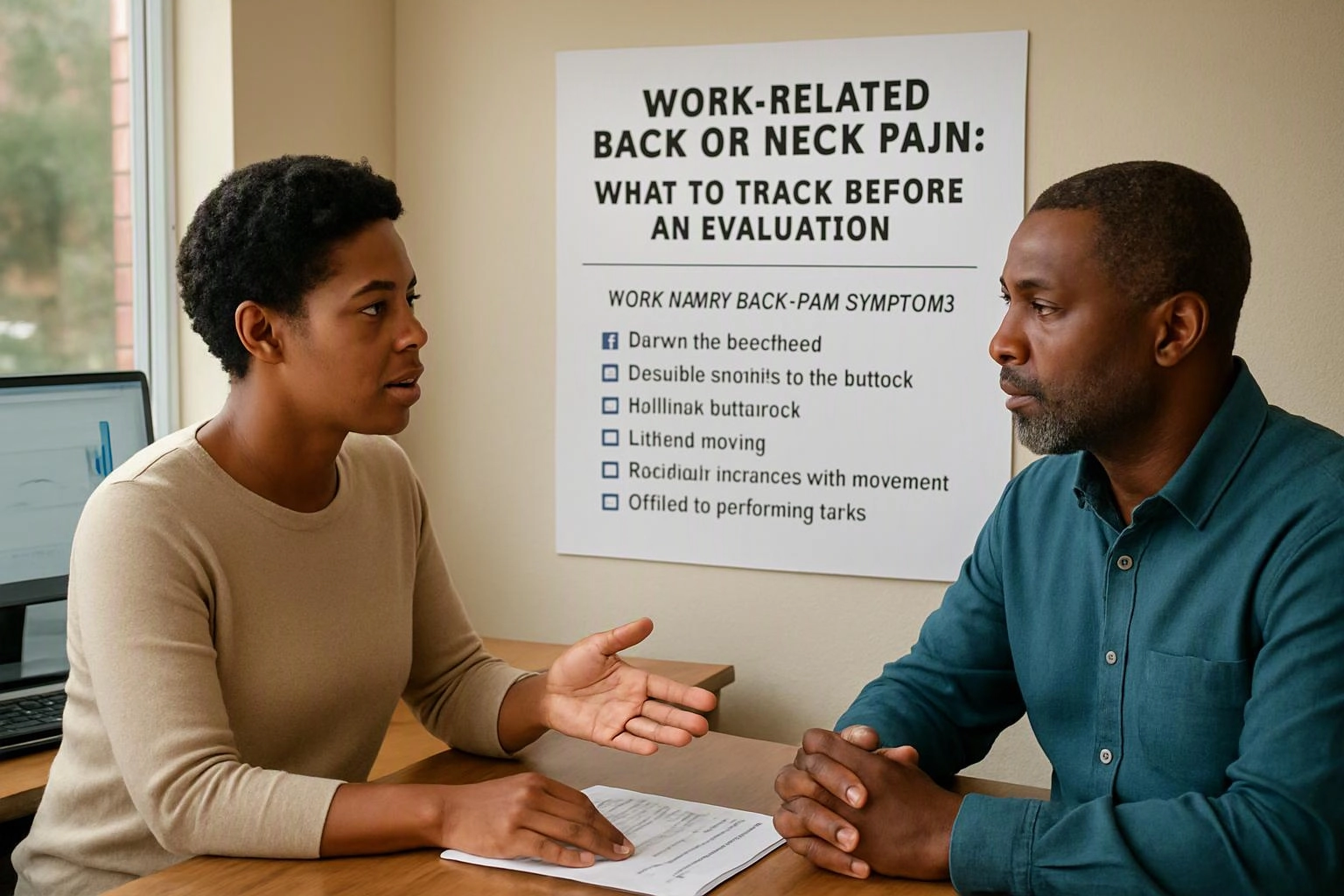
What to Record Before the Evaluation
Before an evaluation, record the symptom history, pain location, symptom onset, pain pattern, previous injury, and daily activities that change your symptoms.
This symptom timeline gives our team a clearer view of what changed and which work task may be involved. Write short, specific notes that describe what happened without trying to diagnose the cause.
What to Track During Work Activities
During work activities, track the task, body position, movement trigger, and symptom response as the activity occurs.
These notes show how lifting, carrying, bending, twisting, reaching, sitting, or standing affects your range of motion and work tolerance. Stop an activity that causes a sharp increase in symptoms and report the change during your evaluation.
How to Describe Symptoms After Work
After work, describe pain intensity, stiffness, numbness, tingling, weakness, radiating pain, sleep disruption, and functional limitation in plain words.
Our team uses these details to distinguish a local muscle complaint from possible nerve symptoms or a broader movement problem. A symptom that appears after work can still matter even when it was not present during the task.
Which Movements Make Work-Related Pain Worse?
The movements that worsen work-related pain are the movements that repeatedly increase symptoms during bending, lifting, twisting, reaching, sitting, standing, walking, or changing position.
Use the comparison below to connect each movement pattern to the symptom response and the activity change to discuss during your evaluation.
| Movement pattern | Pain trigger to record | Body position | Symptom response and activity modification |
|---|---|---|---|
| Lifting or carrying | Pain that starts or increases while handling an object | Bending, bracing, or turning with the load | Record the change and pause the aggravating task for discussion |
| Bending or twisting | A sharp increase, pulling feeling, or muscle spasm | Forward bend, side bend, or rotation | Avoid repeating the painful motion until it can be assessed |
| Reaching | Neck, shoulder, or upper back symptoms | Overhead or extended reach | Record the reach direction and change the task if symptoms increase |
| Sitting, standing, or walking | Stiffness, aching, or symptoms that spread | Fixed or repeated position | Note which position increases symptoms and which position eases them |
Warning Signs That Need Prompt Medical Attention
Back or neck pain needs prompt medical attention when it occurs with progressive weakness, new loss of bladder or bowel control, numbness in the saddle area, or serious trauma.
Red flags can signal a condition that needs urgent medical assessment. Do not wait for a routine work injury evaluation when these warning signs appear.
How Arrowhead Clinic Chiropractor Garden City Uses Your Symptom Checklist
Arrowhead Clinic Chiropractor Garden City reviews your symptom timeline, work demands, movement triggers, and functional changes to inform work injury treatment and physical therapy planning.
We begin with a clinical evaluation that considers pain location, range of motion, strength, sensation, and movements that reproduce symptoms. Our team then uses the functional assessment to decide which care options fit the findings and your work demands.
For more information about our approach, visit our Work Injury Treatment service page. We use your notes to make treatment planning more focused and easier to discuss.
What to Bring to a Work Injury Evaluation
Bring your symptom checklist, work incident details, job duties, medical records, medication list, imaging reports, and questions for the care team.
Organize the information in the order it happened so our team can follow the symptom onset and changes. Include the tasks you can no longer perform comfortably and the movements that increase your symptoms.
Questions about what to expect can also be organized with the First Chiropractic Appointment Checklist: What to Bring and Expect. Clear notes help connect your work injury history to the clinical evaluation.
Contact Arrowhead Clinic Chiropractor Garden City to discuss your work-related back pain or work-related neck pain and arrange an evaluation.
Questions About Tracking Work-Related Back or Neck Pain
Can work-related back pain start hours after an injury?
Yes, work-related back pain can become noticeable hours after an injury because irritation and muscle tension may increase after the task ends. Arrowhead Clinic Chiropractor Garden City reviews the work task, symptom onset, and later changes during the evaluation.
Should I stop working if a movement increases my back or neck pain?
Stop the specific movement that increases back or neck pain and report the change to the appropriate workplace contact and care team. Avoid pushing through worsening symptoms until the movement has been assessed.
What information should I give the clinician about a work injury?
Give the clinician the work task, symptom onset, pain location, pain pattern, movement triggers, previous injuries, and changes in daily function. Include numbness, tingling, weakness, radiating pain, and any red flags.
Can back or neck pain travel into an arm or leg?
Yes, back or neck pain can travel into an arm or leg when nerve-related symptoms are involved. Record the path of the radiating pain and report any numbness, tingling, or weakness during the clinical evaluation.
What should I do if work-related pain keeps getting worse?
Arrange a medical evaluation when work-related pain keeps getting worse, especially when movement becomes limited or nerve symptoms appear. Seek prompt medical attention for progressive weakness, loss of bladder or bowel control, saddle numbness, or serious trauma.
Related Resources
Chiropractor vs. Physical Therapy for Sciatica: Choosing a Starting Point
Compared ToChiropractor vs. Physical Therapist for Neck Pain: What to Compare
Compared ToChiropractor vs. Physical Therapy for Whiplash: Questions Before Choosing
Compared ToChiropractic Care vs. Physical Therapy for Posture Concerns