Sports Injury Symptoms: A Checklist Before Returning to Activity
Sports injury symptoms such as worsening pain, swelling, weakness, instability, numbness, deformity, or loss of motion mean you should stop activity and seek appropriate care; Arrowhead Clinic Chiropractor Garden City evaluates movement and helps guide a safe return to activity.
Request an Estimate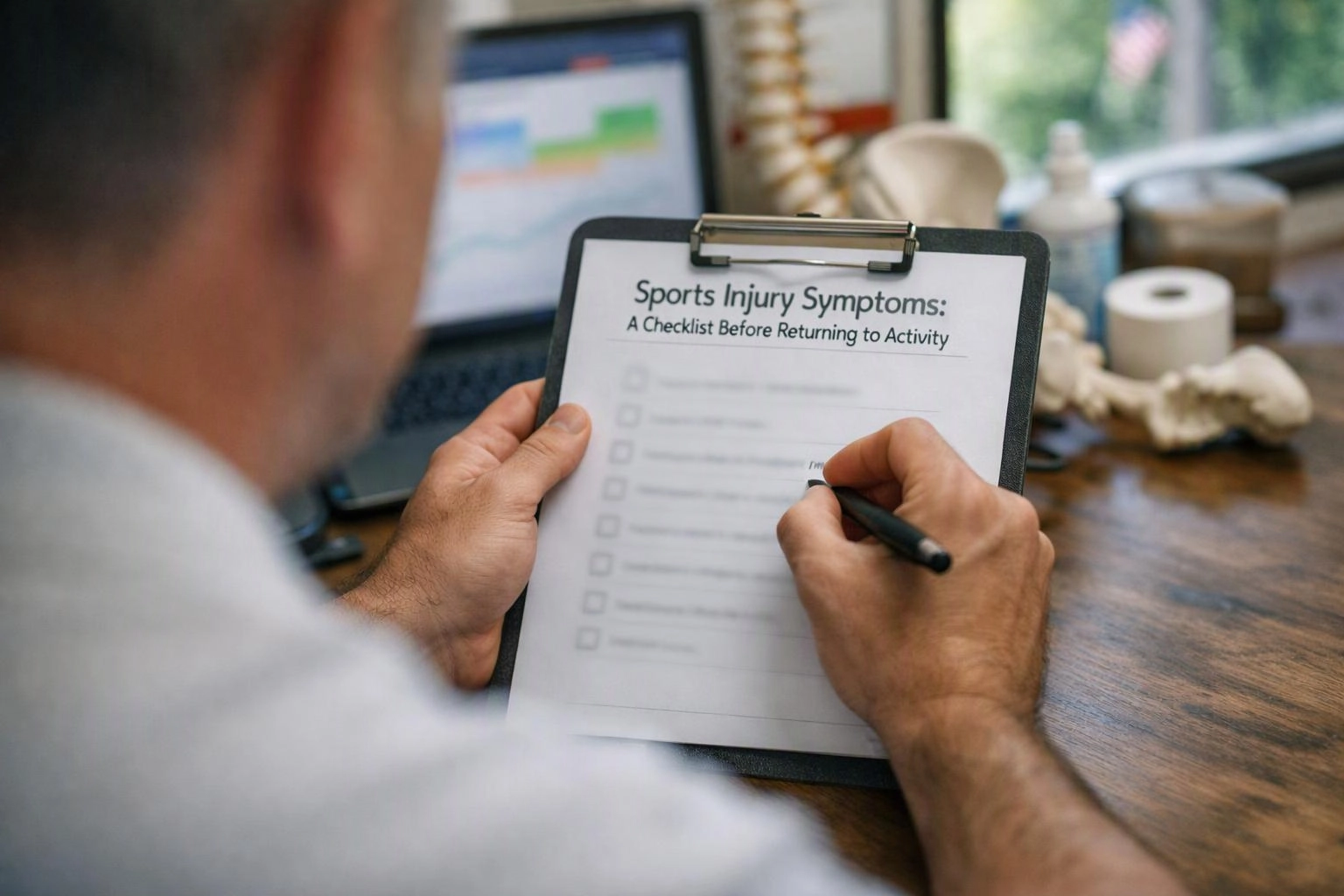
What Sports Injury Symptoms Should You Check Before Activity?
Sports injury symptoms should be checked for pain behavior, swelling, movement, strength, stability, and function before activity resumes. These checks help show whether the body is ready for exercise or needs rest and evaluation.
Look at whether pain is improving or increasing, whether bruising or swelling is spreading, and whether the joint has its usual range of motion. Also notice changes in strength, joint stability, and gait. A limp or guarded movement can show that the injury is still affecting function.
Sprain symptoms, strain symptoms, joint pain, and muscle pain can overlap. Our team uses the pattern of symptoms and movement limits to help decide the next safe step.
Before Activity: Complete This Sports Injury Checklist
Before activity, complete a calm symptom check without forcing painful movement. The goal is to identify warning signs before exercise, training, practice, or competition adds more stress.
Stop the checklist if symptoms increase or movement becomes unsafe. A sports injury evaluation can clarify whether the problem involves a joint, muscle, tendon, nerve, or another structure.
Which Symptoms Mean You Should Stop Exercising?
You should stop exercising when activity causes worsening pain, new swelling, weakness, instability, altered coordination, or neurological symptoms. Do not continue to test an injury when each attempt makes symptoms worse.
| Symptom during activity | What it may mean | Safer response |
|---|---|---|
| Pain during exercise that increases | The current activity may be placing too much load on the injured area. | Stop exercising and reassess the symptoms. |
| Pain that returns with activity | Recovery may be incomplete or movement may be compensating. | Pause the activity and arrange an evaluation if the pattern continues. |
| Swelling, weakness, or joint instability | The joint or surrounding tissue may not tolerate the activity. | Stop and avoid movements that increase the problem. |
| Numbness or loss of coordination | Nerve symptoms or another neurological concern may be present. | Stop activity and seek appropriate medical care. |
| Altered movement or a new limp | The body may be protecting the injured area through compensation. | Rest the area and consider a movement assessment. |
Normal soreness generally settles as the body recovers and does not cause a growing loss of function. Injury symptoms deserve more attention when they change movement, return with activity, or continue to worsen.
During Activity: Monitor Symptoms as You Move
During activity, monitor how symptoms respond to movement, loading, balance, and coordination. A stable response supports caution, while worsening symptoms signal that the activity should stop.
Our team looks at these same patterns during functional testing. Movement quality can reveal a problem even when pain feels manageable at rest.
When Do Sports Injury Symptoms Require Urgent Care?
Sports injury symptoms require urgent medical care when they involve a visible deformity, severe or rapidly worsening pain, loss of function, neurological changes, or a serious head or chest concern.
These red flags need prompt medical attention. Do not return to practice or competition while urgent symptoms are present.
After Activity: Decide Whether to Rest or Seek an Evaluation
After activity, rest and monitor symptoms when the injury is mild, stable, and steadily improving. Seek a sports injury evaluation when pain, swelling, weakness, or loss of motion continues or returns with activity.
A return-to-activity decision should follow improved movement and function, not only reduced pain. We can help identify whether rest, movement care, physical therapy, or another medical evaluation fits the findings.
How Our Sports Injury Treatment Evaluation Supports a Safe Return
Sports injury treatment at Arrowhead Clinic Chiropractor Garden City begins with a movement assessment and a review of how symptoms developed. We examine the affected range of motion, strength, balance, and functional movement.
Our team may use range-of-motion testing, strength assessment, and functional assessment to understand how the injury affects daily and athletic movement. These findings help guide return-to-activity planning and show when additional care, including Physical Therapy, may be appropriate.
Explore our Sports Injury Treatment service to see how movement-based care can support a safer recovery. We focus on the symptoms and movement limits that matter for your activity.
What Does Recurring Sports Injury Pain Mean?
Recurring sports injury pain means the activity may be exceeding the tissue's current tolerance or that movement mechanics and recovery need evaluation. Pain that keeps returning with activity is a reason to pause the same load and review the injury.
Repetitive strain, incomplete recovery, movement compensation, and a training load that rises faster than the body can handle may all contribute to recurring symptoms. Our team checks movement and function to identify patterns that may be keeping the problem active.
Physical therapy may be part of a broader recovery plan when strength, mobility, coordination, or sport-specific function remains limited. The return to activity should be gradual and guided by symptom response.
Questions About Sports Injury Symptoms
Can I exercise if a sports injury still hurts?
Sports injury pain means you should stop or modify activity when it worsens, changes movement, causes weakness, or returns each time you exercise. Arrowhead Clinic Chiropractor Garden City can evaluate the affected movement and help guide the next step.
What is the difference between normal soreness and an injury symptom?
Normal soreness generally improves with recovery, while an injury symptom may worsen, limit range of motion, cause swelling, or change strength and coordination. Pain that returns with activity deserves closer attention.
When should I seek care for sports injury swelling?
Sports injury swelling warrants care when it is new, increasing, paired with severe pain or weakness, or linked with loss of motion or inability to bear weight. Urgent medical care is appropriate when swelling occurs with deformity, numbness, or major loss of function.
Get Guidance Before Returning to Activity
Sports injury symptoms can change during exercise, after activity, or during recovery. Arrowhead Clinic Chiropractor Garden City evaluates movement, strength, and function to help you choose an appropriate next step.
Contact our team for a sports injury evaluation before returning to activity when symptoms persist or return.
Get a Free EstimateRelated Resources
Chiropractor vs. Physical Therapy for Sciatica: Choosing a Starting Point
Compared ToChiropractor vs. Physical Therapist for Neck Pain: What to Compare
Compared ToChiropractor vs. Physical Therapy for Whiplash: Questions Before Choosing
Compared ToChiropractic Care vs. Physical Therapy for Posture Concerns