Sciatica Symptoms: What to Track and When to Seek Care
Sciatica symptoms to track include pain traveling from the low back into the leg, numbness, tingling, weakness, and changes with sitting or movement. Arrowhead Clinic Chiropractor Garden City uses your symptom pattern, medical history, and examination findings to guide next steps and identify symptoms that need prompt medical attention.
Request an EstimateWhat Sciatica Symptoms Should You Track?
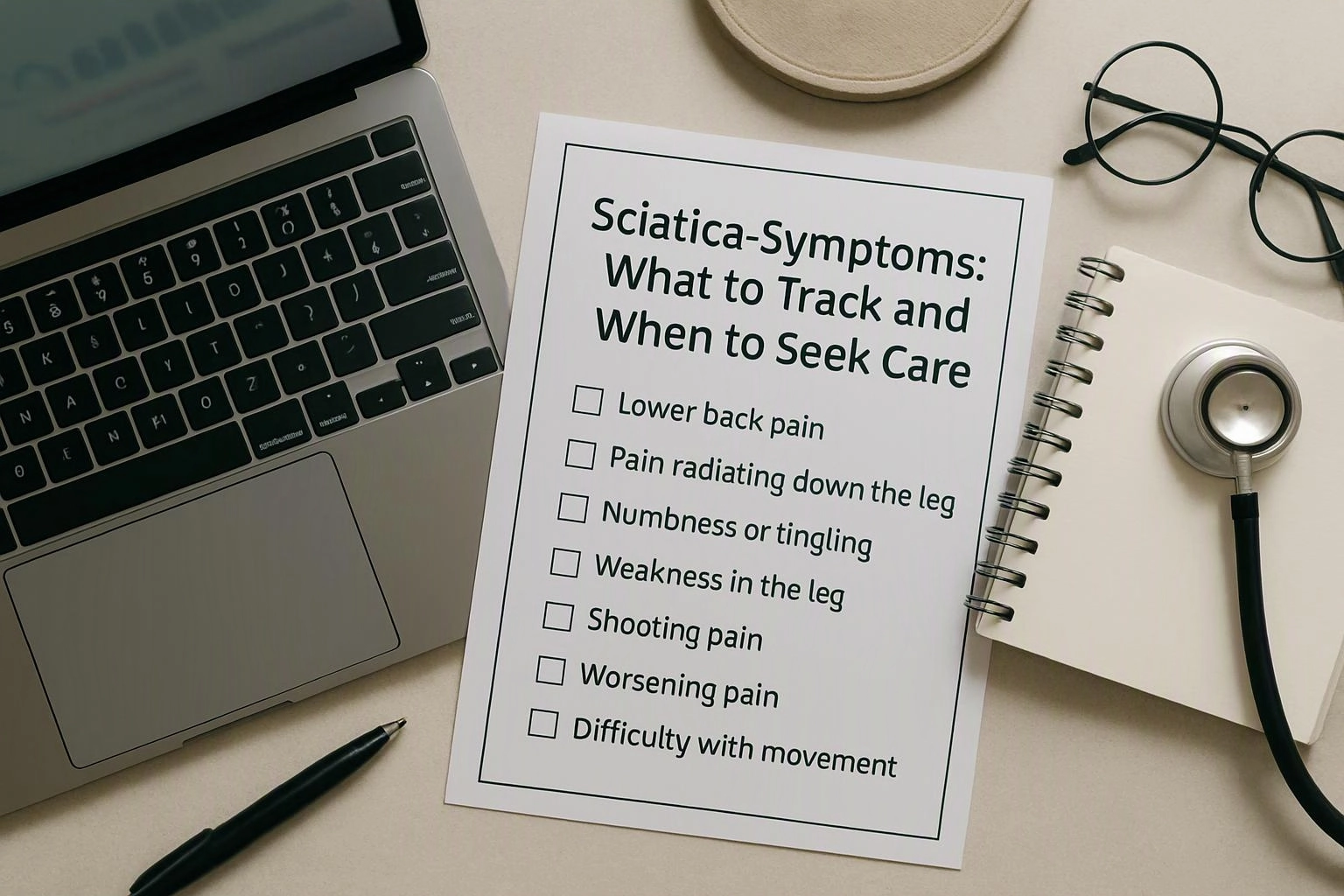
Sciatica symptoms to track include the location, quality, and pattern of pain, along with numbness, tingling, weakness, and changes in daily activities.
Sciatica involves irritation of the sciatic nerve, which travels from the lower back through the hip and leg. Symptoms may include low back pain, burning pain, electric shock-like pain, or pain traveling down the leg.
Record whether symptoms affect one leg, the foot, or specific areas of the leg. Note any leg numbness, pins and needles, or muscle weakness. Also record whether sitting, walking, bending, coughing, or changing position affects the symptoms.
How Do Sciatica and Herniated Disc Symptoms Relate?
A herniated disc can irritate or compress a nerve root and cause back pain that travels into the leg, with numbness, tingling, or weakness in the affected area.
An intervertebral disc is a cushion between the bones of the spine. When disc material affects a nerve root near the lumbar spine, symptoms may include leg pain or leg numbness along the nerve's path.
Before Your Symptom Review
A symptom diary gives our team a clearer view of how the problem began and what changes it. Prepare information that describes your symptoms without relying on memory alone.
Bring the following details to your symptom review:
During Your Symptom Review
During a symptom review, we compare your pain pattern with your movement and neurological symptoms. Clear answers help us understand whether sitting, walking, or bending changes the symptoms.
Use these points to guide the discussion:
After Your Symptom Review
After your symptom review, we use the information to discuss symptom changes, activity response, and appropriate next steps. Your notes can also help you ask focused questions during a care discussion.
Review these points with our team:
What Information Should You Bring to a Disc Evaluation?
Bring a clear symptom timeline, relevant medical records, imaging reports, medication information, and notes about activities that worsen or relieve the symptoms.
Your medical history should include prior back problems, injuries, surgeries, and conditions that may affect nerve symptoms. Bring previous imaging or imaging reports when available, along with a current medication list and details about prior treatment.
Describe daily activity limits in practical terms. Tell us which tasks are harder, how movement affects symptoms, and whether the symptoms interfere with work, sleep, walking, or personal care.
Does Sitting Make Sciatica Worse?
Yes, sitting can worsen sciatica symptoms for some people because sustained hip and low-back positioning may increase discomfort or nerve irritation.
Sitting can place continued stress on the lumbar spine and may increase disc irritation for some people. Track how long sitting affects your radiating pain, and note whether changing position or walking changes the symptoms.
We use this activity response as one part of the overall symptom pattern. Sitting-related discomfort alone does not identify the cause, so we also consider your history, range of motion, and neurological findings.
Which Sciatica Warning Signs Need Prompt Medical Care?
Prompt medical care is warranted for new or worsening weakness, loss of bladder or bowel control, numbness around the inner thighs or groin, or severe symptoms that rapidly change.
These warning signs can indicate severe neurological symptoms that need urgent medical attention. Do not wait for a routine symptom review when these changes appear.
We can help explain routine symptom findings, but urgent medical concerns require prompt attention through an appropriate medical service.
When Should You Seek Care for Back Pain That Travels Into the Leg?
Seek care when radiating back or leg pain persists, interferes with normal activities, returns repeatedly, or appears with numbness, tingling, or weakness.
Persistent leg pain can limit walking, sitting, bending, work, or sleep. Repeated episodes also deserve review because the symptom pattern may change over time.
Our team evaluates the history and physical findings to guide care decisions. New neurological symptoms or rapidly worsening function require prompt medical evaluation.
How We Evaluate Sciatica Symptoms
Arrowhead Clinic Chiropractor Garden City reviews the symptom pattern and performs an examination to help determine whether sciatica-related findings may benefit from our care or require medical referral.
Our clinical history covers symptom onset, pain distribution, activity response, medical history, and warning signs. A physical examination may include range of motion, movement testing, and neurological screening.
When appropriate, we discuss care options such as Sciatica Treatment and Spinal Decompression Therapy. Our recommendations are based on the findings from your evaluation and the symptoms you report.
How Can You Use This Sciatica Checklist?
Use the checklist to record changes, identify warning signs, and communicate clearly with Arrowhead Clinic Chiropractor Garden City or another appropriate medical service.
Keep your symptom diary current when pain, numbness, tingling, or weakness changes. Bring patient questions to your treatment discussion so our team can address the concerns that matter most to your daily activities.
Contact us to discuss your symptoms and arrange an evaluation. Arrowhead Clinic Chiropractor Garden City uses your history and examination findings to help guide the next step.
Questions About Sciatica Symptoms
Can sciatica cause numbness and tingling without severe pain?
Yes, sciatica can cause numbness and tingling even when pain is mild. Arrowhead Clinic Chiropractor Garden City reviews the location and pattern of these neurological symptoms during an evaluation.
What should I do if sciatica weakness is getting worse?
Worsening leg weakness needs prompt medical attention, especially when it affects walking or foot movement. Seek urgent medical care when weakness progresses quickly or appears with bladder, bowel, or saddle-area changes.
Can sciatica symptoms come and go?
Yes, sciatica symptoms can come and go with changes in position, activity, or irritation around a nerve root. Record when symptoms return and what activities or positions were present.
What questions should I ask during a sciatica evaluation?
Ask what your symptom pattern may indicate, which activities may affect symptoms, whether neurological findings need prompt medical care, and what follow-up steps are appropriate.
Related Resources
Chiropractor vs. Physical Therapy for Sciatica: Choosing a Starting Point
Compared ToSpinal Decompression vs. Physical Therapy for Disc-Related Symptoms
Compared ToSpinal Decompression Cost Factors: Questions to Ask Before Starting
What Goes With ItChiropractic Adjustment and Spinal Decompression: When Are Both Needed?