Chiropractic Care vs. Physical Therapy for Back Pain
Chiropractic care and physical therapy can both support back pain care, but the better fit depends on the suspected cause, symptoms, movement limits, and treatment goals. Arrowhead Clinic Chiropractor Garden City evaluates your condition and explains whether chiropractic adjustment, exercise-based care, or coordinated treatment fits your needs.
Request an EstimateHow Chiropractic Care and Physical Therapy Differ for Back Pain
Chiropractic care emphasizes spinal and joint assessment with hands-on treatment, while physical therapy emphasizes movement assessment, therapeutic exercise, and functional rehabilitation.
Back pain can involve spinal joints, muscles, nerves, hips, or movement habits. We use the examination findings to understand whether manual treatment, active rehabilitation, or both support the person's goals.
A chiropractic adjustment is a hands-on technique intended to address selected joint and spinal movement concerns. Physical therapy may use therapeutic exercise to build strength, improve flexibility, and support safer movement patterns.
Our Back Pain Treatment approach begins with the person's symptoms and physical findings, not with a one-size-fits-all choice between services.
Chiropractic Care vs. Physical Therapy at a Glance
The better option depends on the cause of back pain, the person's examination findings, and whether the primary need is hands-on care, movement retraining, or both.
Cost and treatment timelines also depend on the care plan. The comparison below uses relative terms because insurance benefits and clinical needs vary.
| Factor | Chiropractic Care | Physical Therapy |
|---|---|---|
| Cost | Changes with evaluation, services, frequency, and coverage. | Changes with evaluation, exercise planning, frequency, and coverage. |
| Treatment timeline | Depends on symptoms, examination findings, and response to care. | Depends on functional limits, exercise progression, and response to care. |
| Maintenance care | May be discussed when ongoing joint or movement needs support it. | May include continued exercises that support strength and mobility. |
| Best fit | People whose findings support hands-on spinal or joint care. | People who need movement retraining and functional rehabilitation. |
What Chiropractic Care Can Offer for Back Pain
Chiropractic care can offer hands-on assessment and treatment for selected spinal joints and musculoskeletal movement concerns.
Best for: chiropractic care may suit people whose back pain pattern and examination findings point toward a joint or musculoskeletal focus.
What Physical Therapy Can Offer for Back Pain
Physical therapy can offer active rehabilitation that targets mobility, strength, movement patterns, and daily function.
Best for: physical therapy may suit people who need structured movement retraining, strength work, and functional rehabilitation.
Which Treatment Is Better for Your Back Pain?
Neither treatment is universally better because the appropriate choice depends on the suspected source of pain, examination findings, tolerance for movement, and personal goals.
Back pain causes can include joint irritation, muscle strain, reduced mobility, weakness, altered posture, or a problem that needs medical evaluation. Acute back pain may call for a different plan than persistent back pain.
We review the symptom pattern and physical examination before recommending chiropractic care, physical therapy, or coordinated treatment. Treatment goals may include comfortable movement, improved range of motion, stronger support from the core and hips, or return to activity.
When a Combined Care Plan May Make Sense
A combined care plan may make sense when hands-on treatment and progressive movement work address different parts of the same back pain problem.
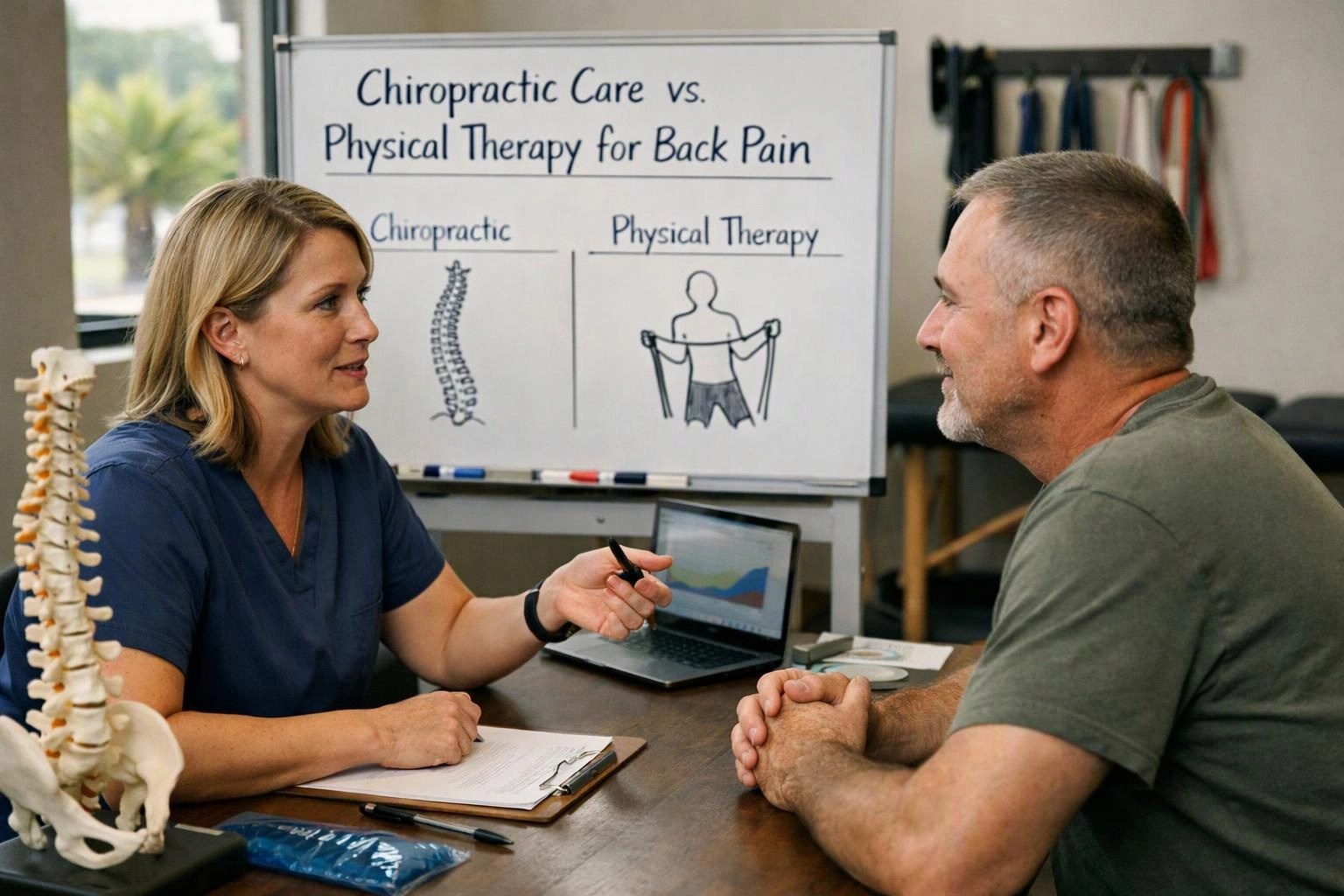
Multidisciplinary care may pair a chiropractic adjustment for selected joint mobility concerns with therapeutic exercise for strength and movement control. We coordinate the focus of care around the person's symptoms, tolerance, and return-to-activity goals.
Combined care is not automatically needed for every person. Our team recommends it when the examination shows that separate treatment goals can support one another.
What Changes the Cost of Back Pain Treatment?
Back pain treatment cost changes with the evaluation, recommended services, visit frequency, care-plan complexity, insurance benefits, and remaining patient responsibility; we explain what our quote covers before care begins.
An initial evaluation may differ from later care because it includes health history, symptom review, examination, and care planning. The recommended treatment frequency can also change the overall out-of-pocket cost.
To obtain an exact quote from us, contact our team and ask what the recommended care plan includes. We can explain the services being considered and how insurance benefits may affect your responsibility.
How Insurance Coverage Can Differ
Insurance coverage can differ between chiropractic care and physical therapy because each plan sets its own covered services, authorization rules, cost sharing, and visit limits.
Health insurance may apply a deductible before benefits begin. A copayment or coinsurance may apply after coverage rules are met, and the amount can vary by plan and service.
Some plans include referral requirements or authorization steps for physical therapy or chiropractic care. We encourage patients to review their insurance benefits and ask our team which information is needed to discuss coverage.
How We Evaluate Back Pain Before Recommending Care
Arrowhead Clinic Chiropractor Garden City evaluates back pain by connecting the health history, symptoms, movement findings, neurological symptoms, and treatment goals.
The evaluation helps us create a care plan that matches the person's needs instead of choosing a service based only on the name of the treatment.
When Back Pain Needs Medical Evaluation
Back pain needs medical evaluation when symptoms suggest a serious condition, neurological involvement, or injury that falls outside routine conservative care.
Seek prompt medical guidance for new or worsening neurological symptoms, significant trauma, fever, or bowel or bladder changes. These red flags can require evaluation beyond chiropractic care or physical therapy.
We can discuss the next appropriate step when the symptom pattern does not fit routine musculoskeletal pain. We do not delay referral when medical evaluation is needed.
Questions About Chiropractic Care and Physical Therapy for Back Pain
Can a chiropractor and physical therapist work together for back pain?
Yes, a chiropractor and physical therapist can work together when hands-on care and active rehabilitation address separate treatment goals. Arrowhead Clinic Chiropractor Garden City evaluates whether coordinated care fits the person's symptoms and examination findings.
Does physical therapy include chiropractic adjustments?
No, physical therapy does not generally include chiropractic adjustments as its primary treatment. Physical therapy focuses on movement assessment, therapeutic exercise, strength, mobility, and functional rehabilitation.
Can chiropractic care help with muscle weakness after back pain?
Chiropractic care may support joint mobility, but therapeutic exercise is usually the direct way to address muscle weakness after back pain. We assess the cause of weakness and explain whether exercise-based care or coordinated treatment fits the findings.
Do insurance plans cover chiropractic care and physical therapy in the same way?
No, insurance plans do not always cover chiropractic care and physical therapy in the same way. Deductibles, copayments, coinsurance, visit limits, covered services, and referral requirements depend on the individual plan.
Choose a Back Pain Care Plan Based on Your Findings
Back pain treatment works best when the care plan matches the suspected cause, examination findings, and treatment goals.
Arrowhead Clinic Chiropractor Garden City can evaluate your condition and explain the next step. Contact our team to discuss your symptoms, coverage questions, and care options.
Get a Free EstimateRelated Resources
Chiropractic Adjustment and Spinal Decompression: When Are Both Needed?
What Goes With ItPosture Correction and Chiropractic Adjustments: Can They Work Together?
What's RequiredFirst Chiropractic Appointment Checklist: What to Bring and Expect
What's RequiredAuto Accident Chiropractic Treatment Checklist: Documents and Information to Prepare