Preparing for a First Chiropractic Evaluation: A Symptom Checklist
Preparing for a First Chiropractic Evaluation: A Symptom Checklist helps you record pain location, onset, triggers, severity, related symptoms, medical history, and questions before meeting Arrowhead Clinic Chiropractor Garden City for an evaluation.
Request an EstimateWhat to Record Before Your Chiropractic Evaluation
Before a first chiropractic evaluation, write down the details that show how your pain began and how it affects daily activities. A clear symptom history helps us connect your concerns with the physical examination.
Your notes do not need medical terms. Use words that describe what you feel, when it occurs, and what changes it.
What to Bring to Your First Chiropractic Appointment
Bring information that gives us a complete view of your health and symptoms. These records can help our team understand previous care and avoid repeating unnecessary steps.
Place your documents and notes together before leaving for your appointment. Digital copies can also help when paper records are not available.
What Happens During the Chiropractic Evaluation
A first chiropractic evaluation combines a health history, symptom discussion, and physical examination so we can assess your condition and determine appropriate next steps.
Our team begins by asking about your health history, symptom timeline, pain pattern, previous injuries, and previous treatment. We then use a physical examination to review posture, mobility, range of motion, and areas of muscle tension.
The evaluation may include a neurological screening to review nerve symptoms such as numbness, tingling, or weakness. We may also use orthopedic tests to understand how specific movements and tissues respond.
A chiropractic adjustment is a hands-on technique that may be discussed when it fits the clinical findings and your goals. You can learn more about our Chiropractic Adjustment approach during the consultation.
Complete the Checklist During Your Appointment
During the chiropractic consultation, answer questions as specifically as you can. Your answers help us compare your reported symptoms with examination findings.
Use the appointment to correct or add to your notes. The following checklist can keep the conversation focused.
How to Review the Next Steps After the Evaluation
The next step after a chiropractic evaluation is a discussion of the findings, appropriate treatment options, and questions about your goals and comfort.
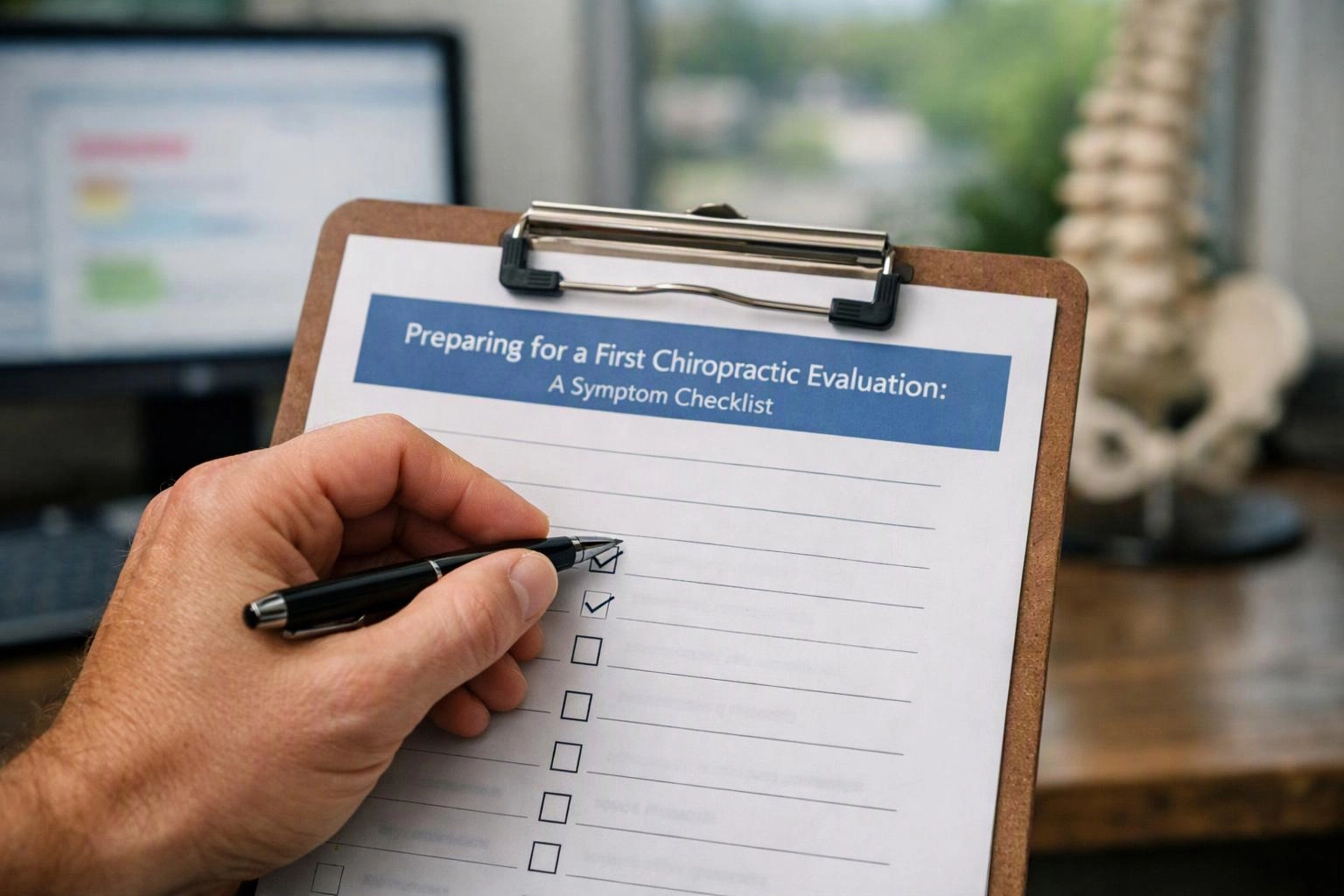
We explain the clinical findings in plain language and connect them to your symptoms. A care plan may address back pain treatment, neck pain treatment, movement changes, or follow-up care.
Ask how a chiropractic adjustment fits the plan, what self-care guidance may support your progress, and which changes should be reported. Your comfort and treatment goals should guide the discussion.
Follow the After-Appointment Notes Checklist
After the appointment, write down the plan while the discussion is fresh. Clear notes can help you follow care instructions and notice meaningful changes.
Keep the record available for follow-up care. Add questions as they come up so you can discuss them with our team at the next visit.
When Pain Symptoms Need Medical Attention Before Chiropractic Care
Red-flag symptoms such as progressive weakness, loss of bladder or bowel control, saddle numbness, or chest pain require prompt medical evaluation before chiropractic care.
Some symptoms may signal a condition that needs urgent medical assessment. Seek immediate medical help for the following warning signs.
Pain Symptoms to Compare With Your Appointment Notes
Use this comparison table to organize pain symptoms before and after your appointment. The pattern and related symptoms can help us understand what to review during the evaluation.
Bring the completed notes to your chiropractic consultation so we can discuss changes with useful context.
| Symptom category | What to note | Why it matters to the evaluation |
|---|---|---|
| Back pain | Location, triggers, positions, and effects on movement | Helps connect symptoms with posture, mobility, and examination findings |
| Neck pain | Pain with turning, sitting, work, or sleep | Helps guide range of motion and orthopedic testing |
| Headache | Location, timing, related neck symptoms, and possible triggers | Adds context to the symptom history and screening process |
| Radiating symptoms | Where pain travels and what movements affect it | Helps us review possible nerve-related patterns |
| Sensory changes | Numbness, tingling, weakness, and changes over time | Supports the neurological screening and safety discussion |
Questions to Ask About Your Chiropractic Care
Ask how the diagnostic findings relate to your pain symptoms and what the care plan is intended to address. Clear answers can help you make informed choices about care.
Useful questions include which treatment options may support back pain treatment or neck pain treatment, how a chiropractic adjustment fits your goals, and what care expectations apply between visits.
Also ask how follow-up planning will work and which changes should prompt a call to our team. We welcome questions about comfort, alternatives, and progress.
Questions About Your First Chiropractic Evaluation
Should I bring imaging results to my first chiropractic appointment?
Yes, bring imaging reports and available imaging discs to your first chiropractic appointment. Arrowhead Clinic Chiropractor Garden City reviews those materials alongside your health history, symptom discussion, and physical examination.
What should I tell the chiropractor if my pain comes and goes?
Tell the chiropractor when the pain starts, how long each episode lasts, what triggers it, and what brings relief. Include related radiating pain, numbness, tingling, weakness, and activities that change the pain pattern.
Can I ask about treatment alternatives during a chiropractic evaluation?
Yes, you can ask about treatment alternatives during a chiropractic evaluation. Ask how each option relates to the findings, your treatment goals, your comfort, and the planned follow-up care.
Schedule your first chiropractic evaluation with Arrowhead Clinic Chiropractor Garden City to discuss your symptom history, examination findings, and care questions. Bring your checklist so our team can focus on the details that matter to you.
Contact our team about your evaluation Get a Free EstimateRelated Resources
Chiropractor vs. Physical Therapy for Sciatica: Choosing a Starting Point
Compared ToChiropractor vs. Physical Therapist for Neck Pain: What to Compare
Compared ToChiropractic Care vs. Physical Therapy for Posture Concerns
Compared ToChiropractic Visit Cost Factors to Clarify Before Booking in Garden City