
What Is Range of Motion?
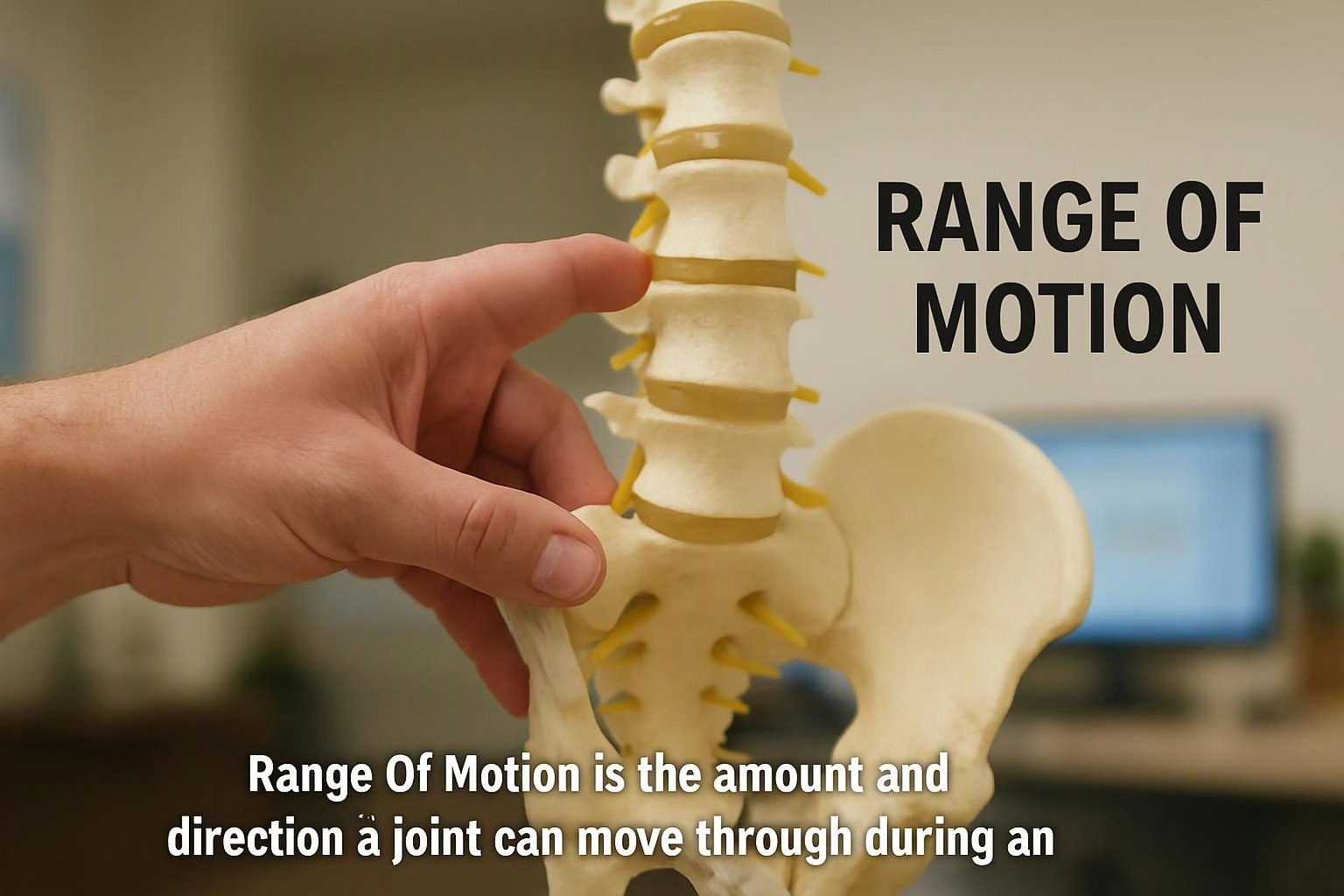
Range of Motion is the available movement at a joint or body region, described by the direction and extent of movement. Clinicians assess it actively when you move on your own and passively when an examiner guides movement. Findings may help describe stiffness, restriction, or change during physical therapy.
Quick Facts About Range of Motion
Category
Physical assessment measure
Used for
Describing joint movement
Common confusion
Movement capacity differs from muscle strength
Also called
ROM
Often discussed with
Physical Therapy
Key Takeaways About Range of Motion
- Range of Motion describes movement direction and extent.
- Physical therapy may track changes during guided movement.
- Range of Motion is not the same as muscle strength.
How Range of Motion Works
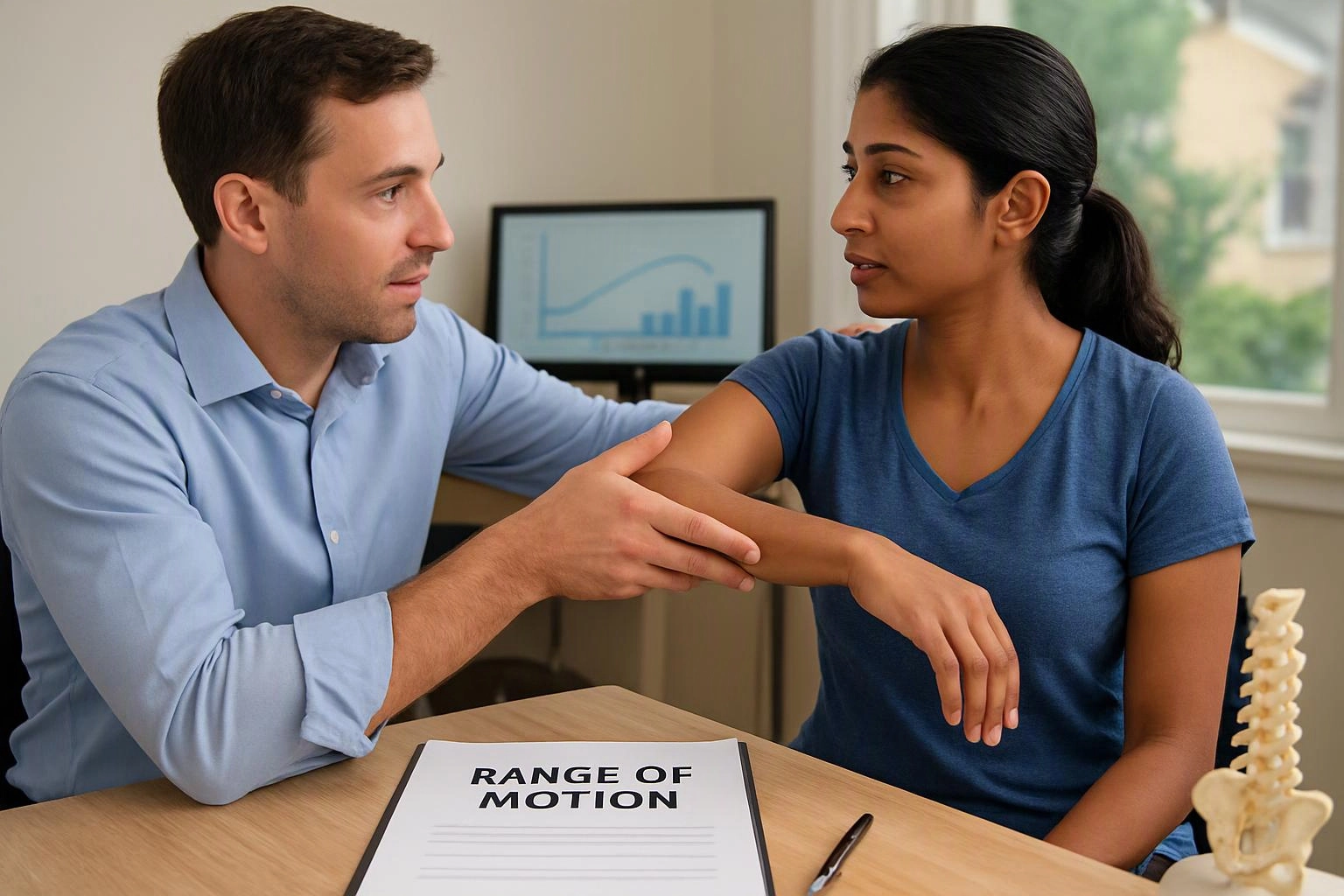
Range of Motion is assessed by observing how a joint or body region moves through an available path. Active movement occurs when you control the motion yourself. Passive movement occurs when an examiner guides the body part while you remain relaxed.
Related glossary terms: Joint Mobility, Gait Analysis, Muscle Spasm.
A clinician may observe movement quality and use a tool called a goniometer to describe joint position. The findings can show whether stiffness, discomfort, or weakness affects a task. Physical therapy may repeat the assessment over time to document changes in movement and guide exercise selection.
From the Arrowhead Clinic Chiropractor Garden City team
When we assess Range of Motion during Physical Therapy, we observe the movement pattern along with the available joint motion. We compare active and guided movement when that distinction helps explain a limitation. We also record how the finding relates to a task such as reaching, walking, or turning.
Range of Motion in Practice: A Real-World Example
During Physical Therapy, a person with shoulder stiffness may have difficulty lifting an arm overhead. Range of Motion findings help describe how far the arm moves and whether the limitation appears during active or guided movement.
Related Services
Related Terms
Joint Mobility
Joint Mobility is the available movement within a joint and the surrounding tissues that support that…
Gait Analysis
Gait Analysis is a clinical assessment of how you walk or move. The assessment examines foot…
Muscle Spasm
A Muscle Spasm is an involuntary tightening of a muscle that may limit movement and create…
Forward Head Posture
Forward Head Posture is a postural pattern in which the head rests ahead of the shoulders…
Arrowhead Clinic Chiropractor Garden City
Have Questions About Range of Motion?
Contact Arrowhead Clinic Chiropractor Garden City for practical guidance on Range of Motion and related chiropractor work in Garden City.