
What Is Gait Analysis?
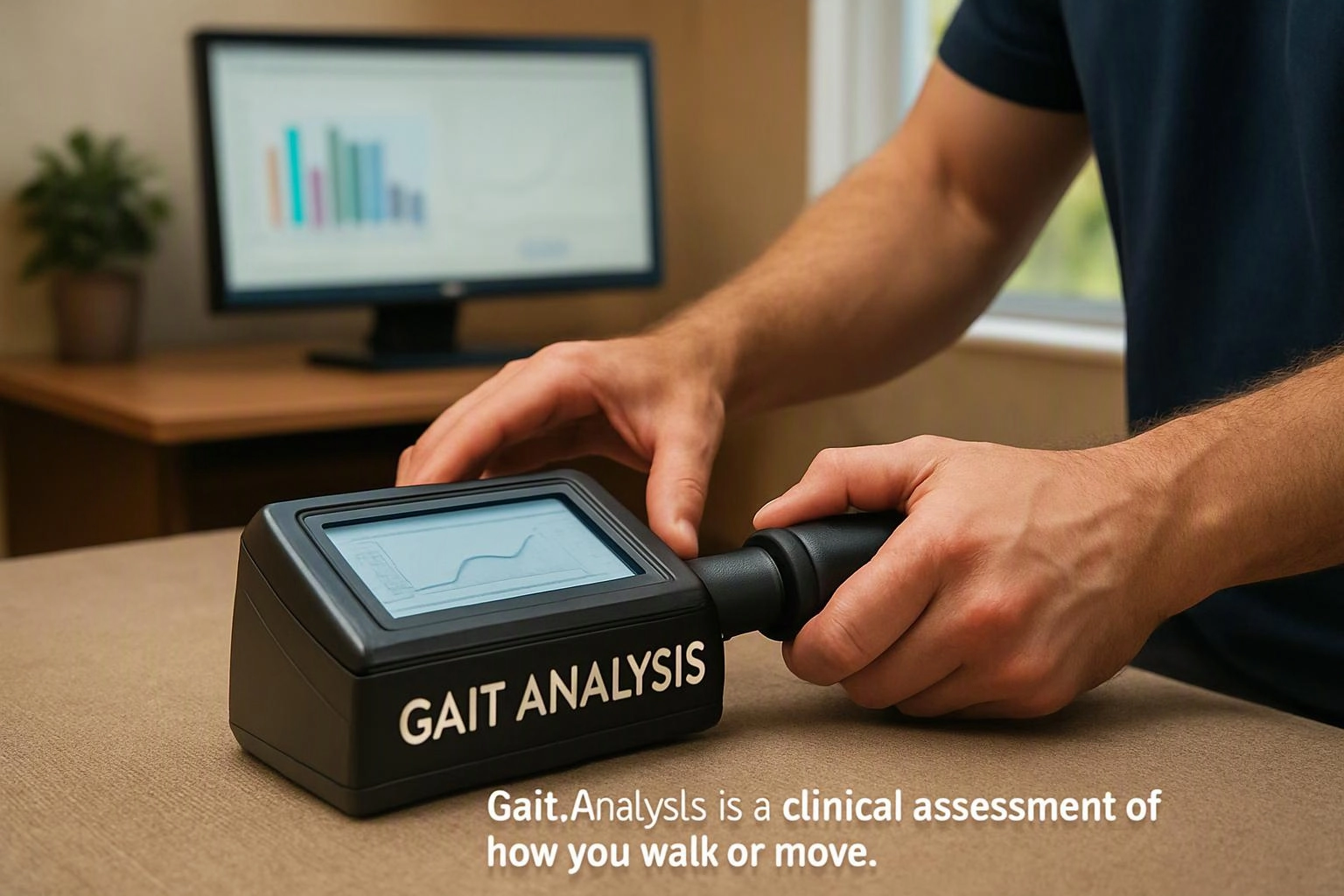
Gait Analysis is a clinical assessment of how you walk or move. The assessment examines foot placement, stride pattern, balance, joint motion, and muscle coordination during movement. Providers may observe movement directly or use video and other tools to identify patterns that can affect posture, comfort, or physical function.
Quick Facts About Gait Analysis
Category
Movement assessment
Used for
Walking and movement evaluation
Common confusion
Not a footwear fitting
Also called
Walking Assessment, Gait Assessment
Often discussed with
Physical Therapy
Key Takeaways About Gait Analysis
- Movement patterns matter more than appearance alone.
- The assessment can guide targeted physical therapy activities.
- Gait Analysis is not the same as a footwear fitting.
How Gait Analysis Works

Gait Analysis begins with observing how a person stands, walks, changes direction, or performs another relevant movement. A provider may examine foot contact, step symmetry, pelvic control, knee position, and trunk motion. Video can help review movement that is difficult to assess during a single observation.
Related glossary terms: Joint Mobility, Range of Motion, Forward Head Posture.
The findings help connect movement patterns with physical therapy goals. For example, limited ankle motion may change how the foot meets the ground and how the knee moves afterward. A physical therapist can use these observations to select exercises, movement practice, or balance work that matches the person’s functional needs. Range of Motion and Joint Mobility assessments may add context when a movement pattern needs closer review.
From the Arrowhead Clinic Chiropractor Garden City team
When we use Gait Analysis in Physical Therapy, we watch the full movement pattern instead of focusing on one joint alone. We compare walking mechanics with balance, strength, mobility, and the person’s reported activity limits. These observations help our team choose practical exercises and track changes in movement quality.
Gait Analysis in Practice: A Real-World Example
A person with recurring lower-leg discomfort may show uneven foot contact and reduced control during walking. A Physical Therapy assessment can use those observations to guide balance practice, mobility work, and movement retraining.
Related Services
Related Terms
Joint Mobility
Joint Mobility is the available movement within a joint and the surrounding tissues that support that…
Range of Motion
Range of Motion is the available movement at a joint or body region, described by the…
Forward Head Posture
Forward Head Posture is a postural pattern in which the head rests ahead of the shoulders…
Sciatic Nerve
The sciatic nerve is the body’s largest peripheral nerve. It begins from nerve roots in the…
Arrowhead Clinic Chiropractor Garden City
Have Questions About Gait Analysis?
Contact Arrowhead Clinic Chiropractor Garden City for practical guidance on Gait Analysis and related chiropractor work in Garden City.