
What Is Core Stability?
Core Stability is the ability of the muscles around the abdomen, back, pelvis, and hips to support controlled movement. These muscles help maintain trunk alignment while you bend, lift, walk, or change position. Core stability describes coordinated control and endurance, not simply abdominal strength or the appearance of toned muscles.
Quick Facts About Core Stability
Category
Movement control
Used for
Trunk support during movement
Common confusion
Abdominal strength alone
Also called
Core Strength, Trunk stability
Often discussed with
Back Pain Treatment
Key Takeaways About Core Stability
- It depends on coordination, endurance, and trunk control.
- Breathing and posture can affect how the trunk supports movement.
- Core stability is not the same as visible abdominal strength.
How Core Stability Works
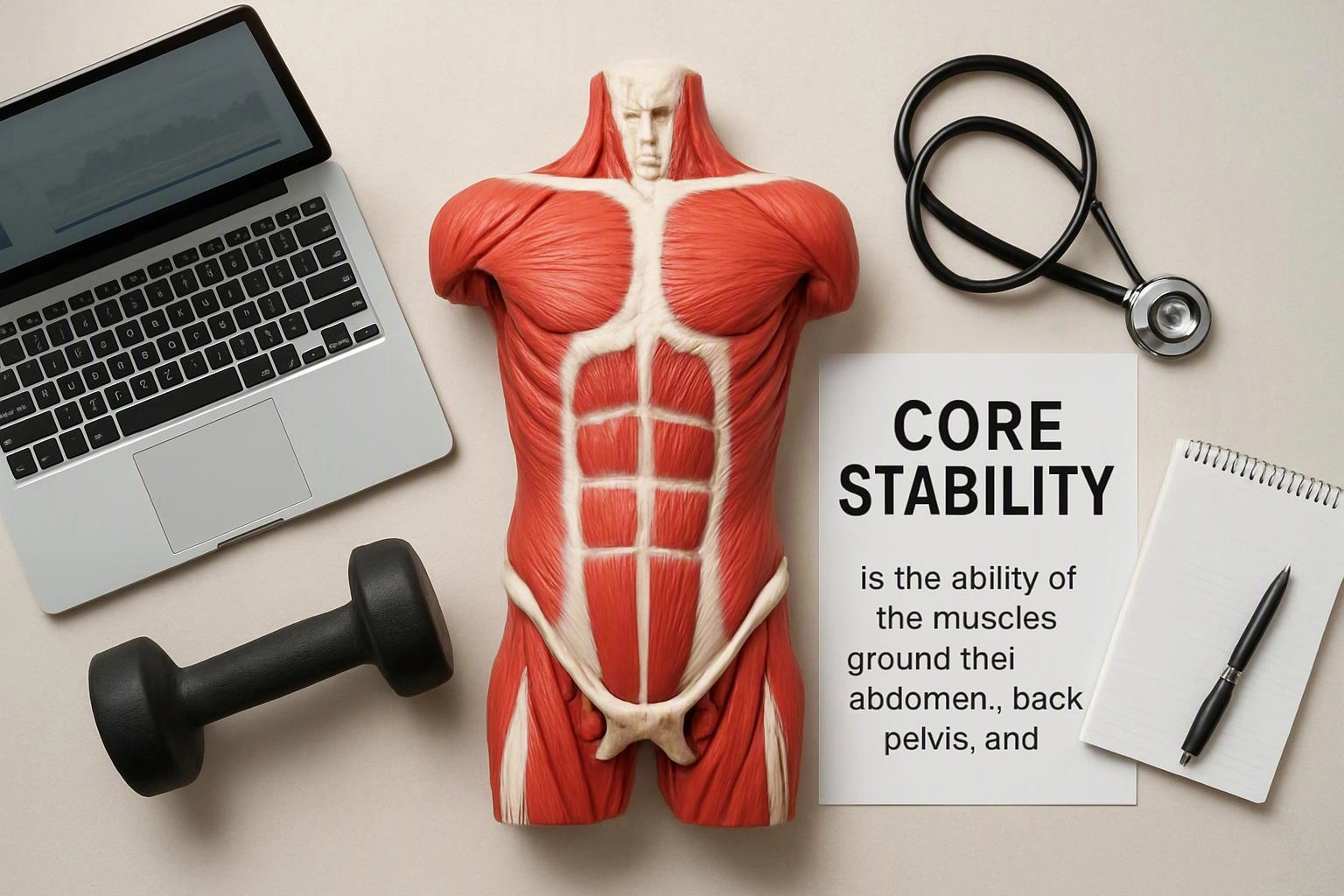
Core Stability works through coordinated activity among the trunk, pelvis, hips, and breathing muscles. The muscles adjust their tension as your body changes position. This control helps keep the spine and pelvis steady while the arms and legs move.
Related glossary terms: Lumbar Spine, Pelvic Tilt, Range Of Motion.
Clinicians may observe posture, breathing, balance, and movement quality during simple tasks. A person may show reduced control when lifting, rising from a chair, or maintaining a stable position. The goal is not to keep the trunk rigid. Effective control allows necessary movement while limiting unwanted shifting.
Core Stability in Back Pain Treatment
Back Pain Treatment may address core control alongside joint motion, muscle tension, and daily movement habits. A provider can select exercises or movement changes that match the person’s presentation. Progress is judged by smoother control and better tolerance of ordinary activities.
From the Arrowhead Clinic Chiropractor Garden City team
When we assess Core Stability, we watch how the trunk and pelvis respond during common movements. We consider breathing, posture, coordination, and control instead of treating abdominal strength as the only measure. Our team connects these findings with the person’s back pain pattern and daily activity demands.
Core Stability in Practice: A Real-World Example
A person with back pain may have trouble keeping the pelvis steady while bending to pick up a light object. Core stability work may focus on controlled breathing, trunk positioning, and gradual movement practice during that task.
Related Services
Related Terms
Lumbar Spine
Lumbar Spine is the lower section of the vertebral column between the thoracic spine and pelvis…
Pelvic Tilt
Pelvic Tilt is a change in the position of the pelvis that shifts its front edge…
Range Of Motion
Range Of Motion is the amount and direction a joint can move through during an activity…
Muscle Spasm
A muscle spasm is a sudden, involuntary tightening of a muscle that may feel hard, painful…
Arrowhead Clinic Chiropractor Garden City
Have Questions About Core Stability?
Contact Arrowhead Clinic Chiropractor Garden City for practical guidance on Core Stability and related chiropractor work in Garden City.