
What Is Pelvic Tilt?
Pelvic Tilt is a change in the position of the pelvis that shifts its front edge forward or backward in relation to the spine and legs. An anterior tilt moves the front of the pelvis forward, while a posterior tilt moves it backward. The position can influence spinal curves, posture, and movement.
Quick Facts About Pelvic Tilt
Category
Postural alignment pattern
Used for
Posture and movement assessment
Common confusion
A pelvic position is not the same as a hip disorder
Also called
Pelvic Alignment, Anterior pelvic tilt
Often discussed with
Posture Correction
Key Takeaways About Pelvic Tilt
- Pelvic Tilt describes pelvic rotation, not a hip joint injury.
- Posture and muscle tension can influence pelvic position.
- Pelvic Tilt is often confused with leg-length difference.
How Pelvic Tilt Works
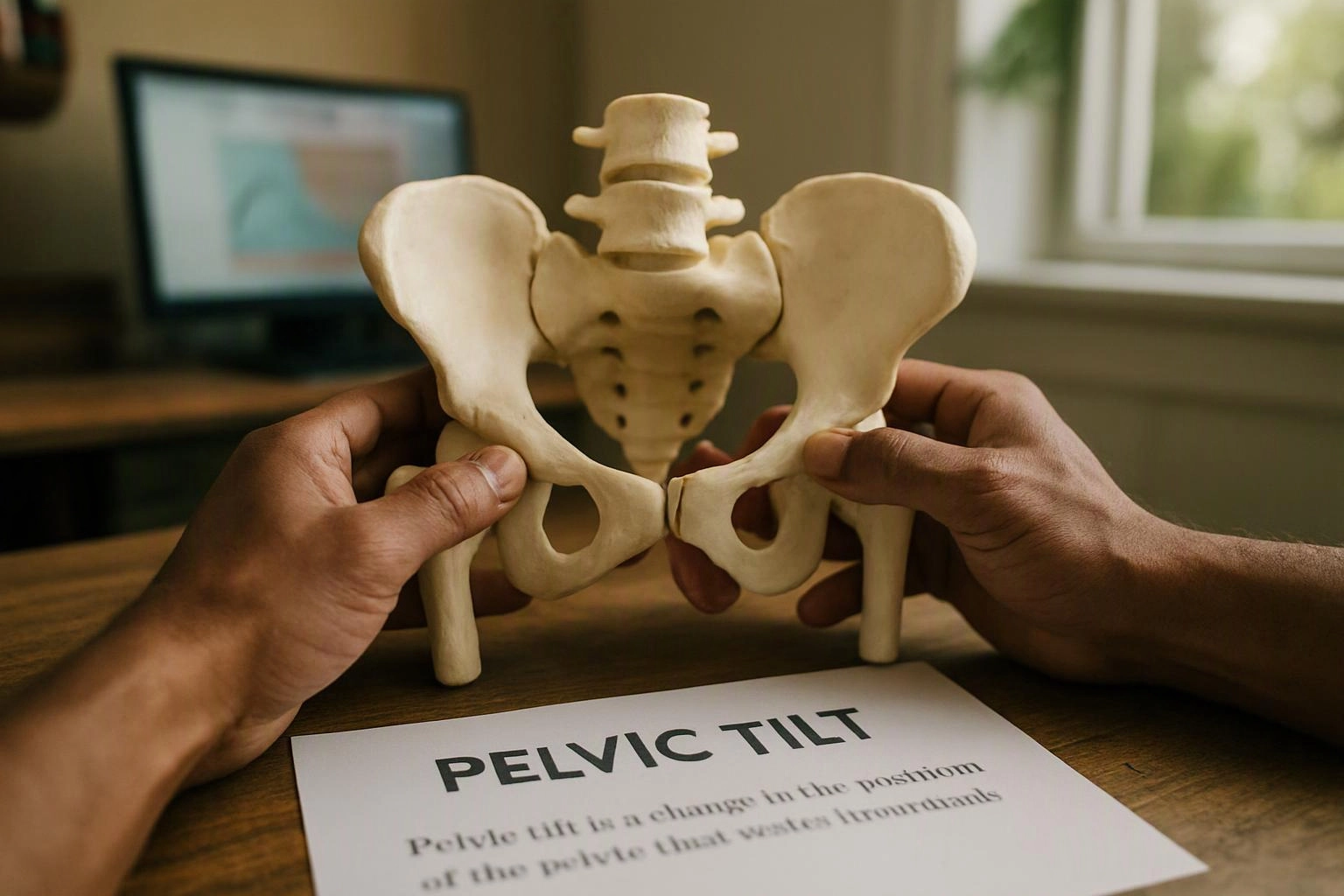
Pelvic Tilt describes how the pelvis rotates around the hip joints and changes the relationship between the pelvis and lower spine. Anterior rotation tips the front of the pelvis forward, while posterior rotation tips the front backward. A neutral position keeps the pelvis balanced between these directions.
Related glossary terms: Lordosis, Lumbar Spine, Sacroiliac Joint.
Clinicians observe pelvic position while you stand, walk, bend, or sit. They may also compare the position of the hip bones with the curve of the lower back. Lordosis and Lumbar Spine alignment can appear different when pelvic rotation changes, but pelvic tilt is only one part of a posture assessment. The position may also vary with muscle tension, movement habits, and body position.

From the Arrowhead Clinic Chiropractor Garden City team
When we assess Pelvic Tilt, we observe the pelvis during standing and movement, then consider how the lower back, hips, and surrounding muscles respond. Our team connects the finding to the person’s posture pattern instead of treating pelvic position as an isolated diagnosis. We use that information within Posture Correction planning.
Pelvic Tilt in Practice: A Real-World Example
A person who stands with the front of the pelvis rotated forward may show a deeper lower-back curve and tension around the hips. During Posture Correction, the assessment considers whether that position changes during walking, sitting, or guided movement.
Related Services
Related Terms
Lordosis
Lordosis is an inward curve of the spine, most noticeable in the neck and lower back…
Lumbar Spine
Lumbar Spine is the lower section of the vertebral column between the thoracic spine and pelvis…
Sacroiliac Joint
Sacroiliac Joint is the connection between the sacrum at the base of the spine and the…
Core Stability
Core Stability is the ability of the muscles around the abdomen, back, pelvis, and hips to…
Arrowhead Clinic Chiropractor Garden City
Have Questions About Pelvic Tilt?
Contact Arrowhead Clinic Chiropractor Garden City for practical guidance on Pelvic Tilt and related chiropractor work in Garden City.