
What Is a Seat Belt Injury?
Seat Belt Injury is a physical injury caused by the restraint pressing against the body or by the body moving forcefully during a vehicle collision. The injury may involve bruised skin, strained muscles, irritated joints, or discomfort in the chest, abdomen, neck, or back. Symptoms can appear immediately or develop after the crash.
Quick Facts About Seat Belt Injury
Category
Auto accident injury
Used for
Describing restraint-related pain and tissue irritation
Common confusion
Often confused with whiplash
Also called
Seatbelt Trauma, Seatbelt injury
Often discussed with
Auto Accident Injury Treatment, Whiplash Treatment
Key Takeaways About Seat Belt Injury
- The restraint itself can contribute to localized pain or bruising.
- Symptoms may affect areas beyond the seat belt path.
- Seat belt injury is not the same as whiplash.
How Seat Belt Injury Works
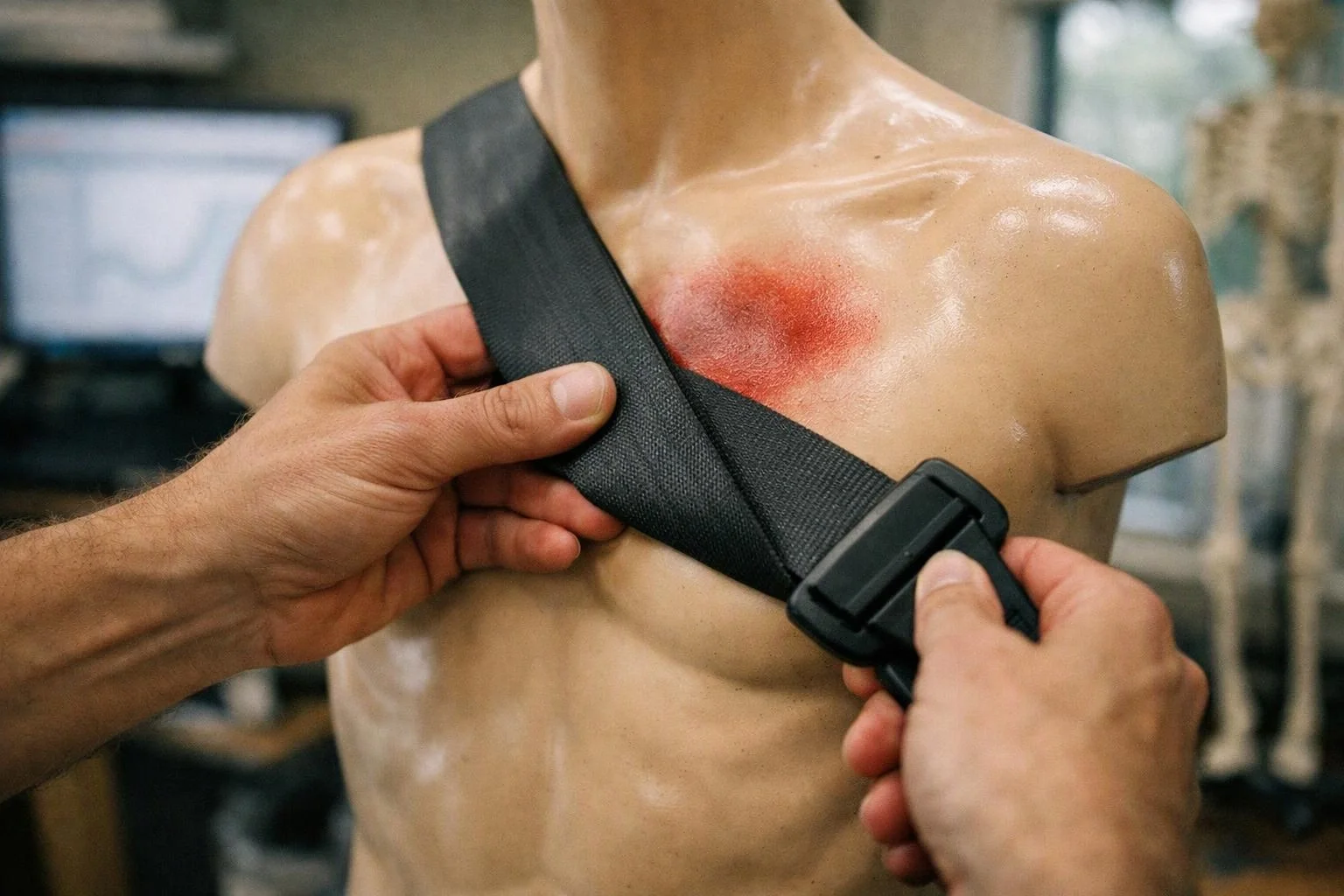
Seat Belt Injury develops when crash forces transfer through the restraint and surrounding body tissues. The shoulder strap may place pressure across the chest, collarbone, or neck. The lap portion may affect the abdomen, pelvis, or hip area. Muscle strain, joint irritation, and bruising can occur in or near those contact zones.
Related glossary terms: Cervical Spine, Lumbar Spine, Muscle Spasm.
Assessment connects the reported symptoms with the collision position, restraint path, and movement of the body. A clinician may review pain location, tenderness, posture, and range of motion. Whiplash describes a neck movement injury, while a seat belt injury can involve several body regions. Soft tissue injury is another related term because muscles, ligaments, and connective tissues may be affected.
From the Arrowhead Clinic Chiropractor Garden City team
When we assess a seat belt injury, we ask how the body moved and where the restraint made contact. We review reported symptoms alongside posture, tenderness, and movement findings. Our team also watches for patterns that may point to a separate neck, back, or joint problem.
Seat Belt Injury in Practice: A Real-World Example
After a rear-end collision, a driver may report soreness across the chest and shoulder where the belt held the body. The same person may also experience back stiffness from the force of the vehicle movement.
Related Services
Related Terms
Cervical Spine
Cervical Spine is the upper section of the spinal column that supports the head and protects…
Lumbar Spine
Lumbar Spine is the lower section of the vertebral column between the thoracic spine and pelvis…
Muscle Spasm
A muscle spasm is a sudden, involuntary tightening of a muscle that may feel hard, painful…
Range Of Motion
Range Of Motion is the amount and direction a joint can move through during an activity…
Arrowhead Clinic Chiropractor Garden City
Have Questions About Seat Belt Injury?
Contact Arrowhead Clinic Chiropractor Garden City for practical guidance on Seat Belt Injury and related chiropractor work in Garden City.