
What Is Kyphosis?
Kyphosis is an outward curve of the upper spine that gives the back a rounded appearance. A mild curve may be part of normal spinal shape. A more pronounced curve can develop from posture, age-related changes, spinal conditions, or vertebral injury. Assessment considers spinal alignment, movement, symptoms, and contributing factors.
Quick Facts About Kyphosis
Category
Spinal alignment condition
Used for
Describing upper-back curvature
Common confusion
Often confused with scoliosis or poor posture
Also called
Rounded Upper Back, Hyperkyphosis
Often discussed with
Posture Correction
Key Takeaways About Kyphosis
- Kyphosis affects the spine’s outward curve in the upper back.
- Posture-related rounding may change with position and movement.
- Kyphosis is not the same condition as lordosis or scoliosis.
How Kyphosis Works
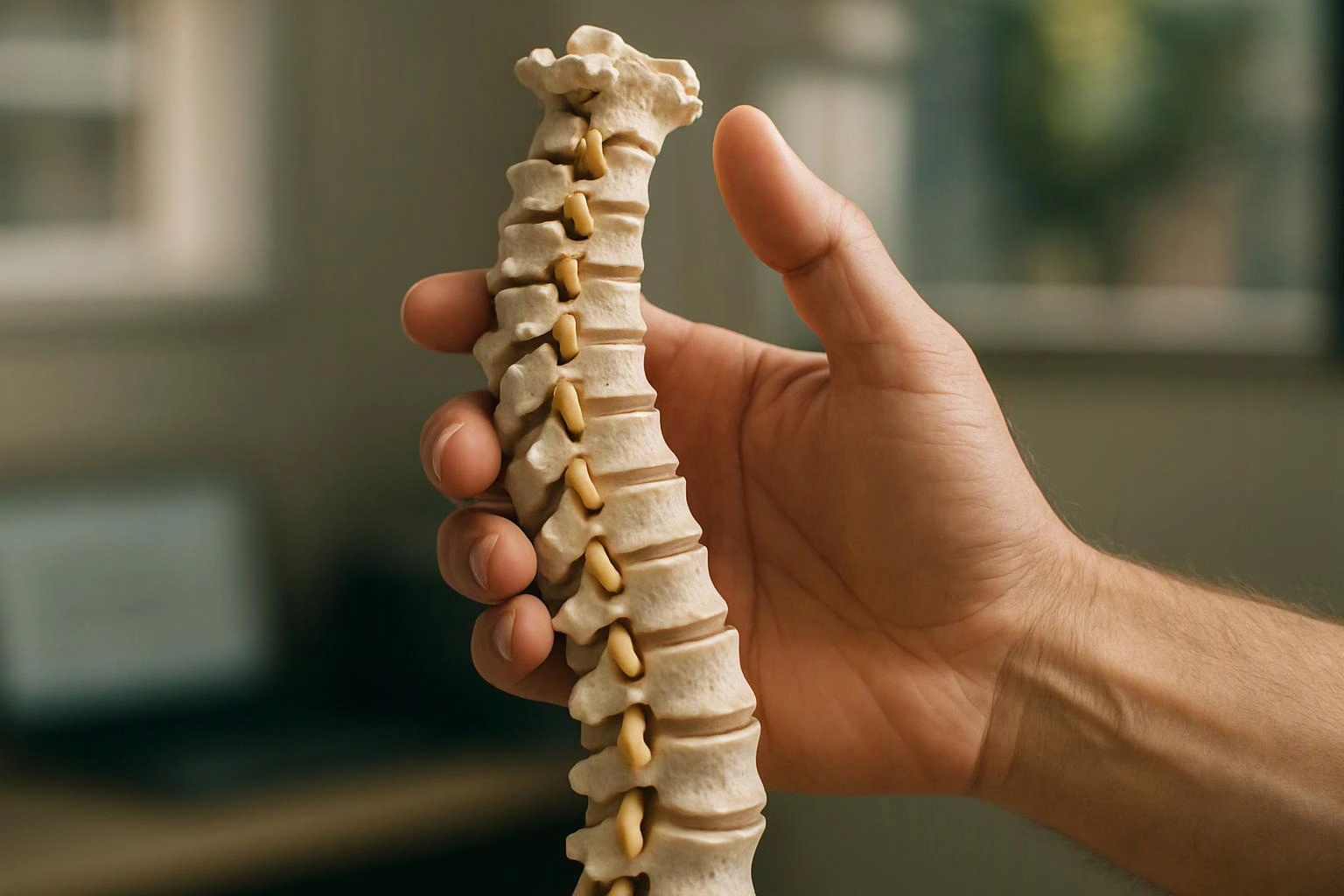
Kyphosis describes the spine’s forward-facing curve when viewed from the side. The upper back normally has an outward curve, while the lower back curves inward. Kyphosis becomes a clinical concern when the curve appears pronounced, changes over time, or relates to limited movement and discomfort.
Related glossary terms: Cobb Angle, Forward Head Posture, Lordosis.
Assessment looks at standing posture, spinal movement, muscle balance, and the way the head, shoulders, and pelvis align. Posture-related rounding may change when you reposition or move. Structural kyphosis can remain more consistent across positions. Cobb angle measurements may help describe spinal curvature when imaging is available, while a physical examination adds information about function.
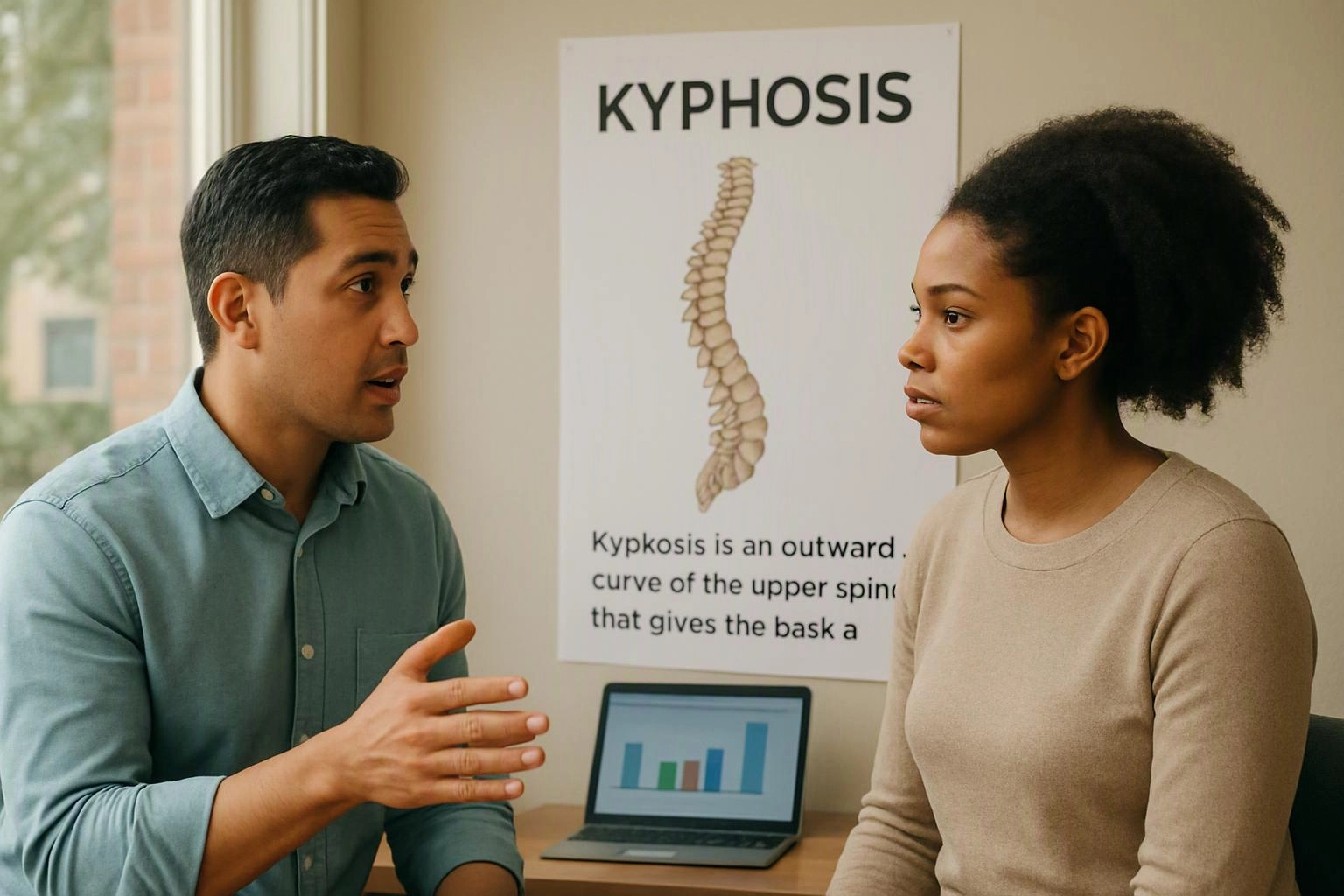
From the Arrowhead Clinic Chiropractor Garden City team
When we assess kyphosis during Posture Correction, we observe standing alignment and how the upper back moves through comfortable positions. We also consider shoulder position, head posture, and muscle control. Our team uses these findings to distinguish a flexible posture pattern from a curve that may need further clinical evaluation.
Kyphosis in Practice: A Real-World Example
A person who spends much of the day at a desk may show rounded shoulders and an increased upper-back curve during standing. During Posture Correction, the team can observe whether the alignment changes with movement and whether limited mobility contributes to the pattern.
Related Services
Related Terms
Cobb Angle
Cobb Angle is a radiographic measurement used to describe the sideways curvature of the spine. A…
Forward Head Posture
Forward Head Posture is a postural alignment pattern in which the head rests in front of…
Lordosis
Lordosis is an inward curve of the spine, most noticeable in the neck and lower back…
Cervical Spine
Cervical Spine is the upper section of the spinal column that supports the head and protects…
Arrowhead Clinic Chiropractor Garden City
Have Questions About Kyphosis?
Contact Arrowhead Clinic Chiropractor Garden City for practical guidance on Kyphosis and related chiropractor work in Garden City.