
What Is Disc Herniation?
Disc Herniation is a condition in which the soft inner material of an intervertebral disc pushes through a weakened or torn outer layer. The displaced material can irritate nearby spinal nerves and may contribute to back pain, leg pain, numbness, tingling, or weakness. Symptoms depend on the disc’s location and the affected nerve.
Quick Facts About Disc Herniation
Category
Spinal disc condition
Used for
Understanding back and radiating leg symptoms
Common confusion
Disc herniation and disc bulge are different findings
Also called
Herniated Disc, Slipped Disc
Often discussed with
Back Pain Treatment, Spinal Decompression Therapy
Key Takeaways About Disc Herniation
- Disc herniation involves displaced material within an intervertebral disc.
- Symptoms vary by spinal level and nerve involvement.
- A disc bulge is not always the same condition.
How Disc Herniation Works
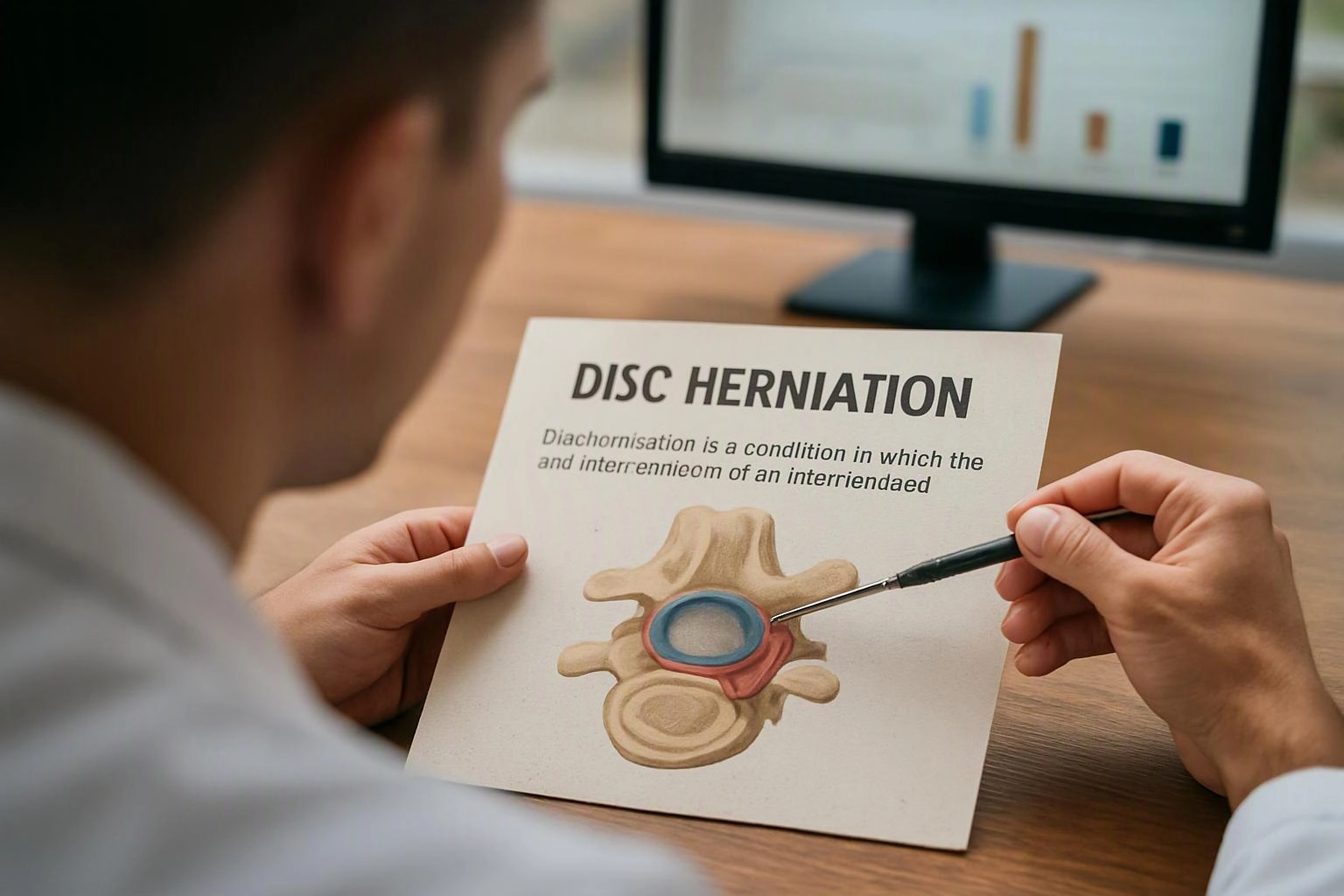
Disc Herniation develops when the outer ring of an intervertebral disc weakens or tears and the inner material moves outward. The change can narrow space around a spinal nerve, especially in the lumbar spine. Nerve irritation may produce pain that travels from the back into the buttock or leg.
Related glossary terms: Disc Bulge, Intervertebral Disc, Lumbar Spine.
A clinician considers the symptom pattern, spinal movement, strength, sensation, and reflexes when assessing the condition. Imaging may help show the disc’s shape and position, but an image does not always explain every symptom. A disc bulge describes a broader outward change in the disc wall, while herniation usually refers to a more focused displacement. The lumbar spine is a common area for symptoms that extend into the leg.
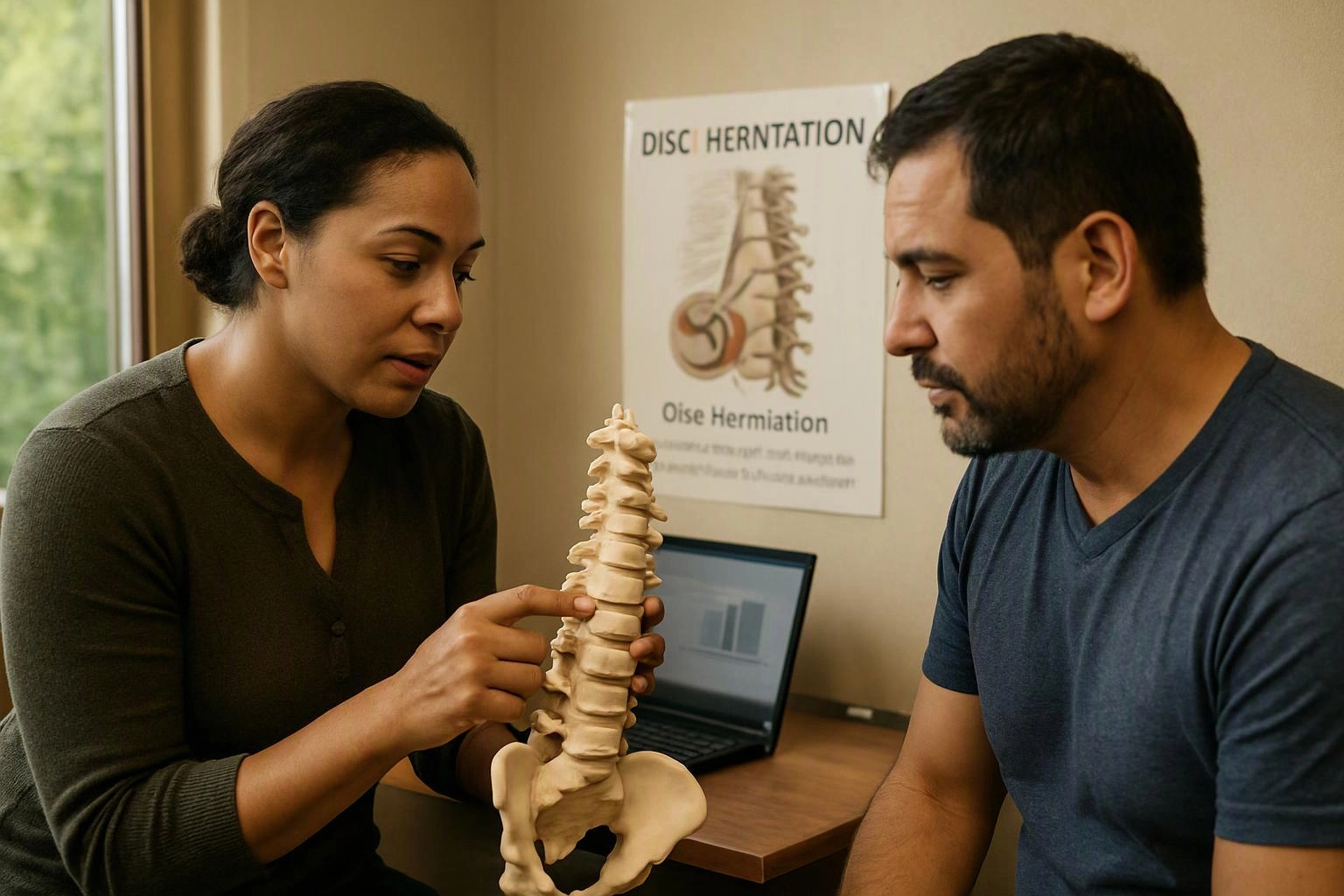
From the Arrowhead Clinic Chiropractor Garden City team
When we assess disc herniation, we review the person’s symptoms, movement, strength, sensation, and relevant health history. Our team also considers whether symptoms follow a nerve pattern and whether the presentation calls for evaluation by another medical professional before back pain treatment proceeds.
Disc Herniation in Practice: A Real-World Example
A person with a lumbar disc herniation may feel back pain that travels through the buttock and down one leg. Movement testing may show limited bending and symptoms that change with certain positions.
Related Services
Related Terms
Disc Bulge
A disc bulge is a condition in which an intervertebral disc extends beyond its usual boundary…
Intervertebral Disc
An intervertebral disc is a flexible cushion between neighboring spinal bones called vertebrae. Each disc has…
Lumbar Spine
Lumbar Spine is the lower section of the vertebral column between the thoracic spine and pelvis…
Pinched Nerve
A pinched nerve is a nerve affected by pressure or irritation from nearby tissue, such as…
Arrowhead Clinic Chiropractor Garden City
Have Questions About Disc Herniation?
Contact Arrowhead Clinic Chiropractor Garden City for practical guidance on Disc Herniation and related chiropractor work in Garden City.