
What Is an Intervertebral Disc?
An intervertebral disc is a flexible cushion between neighboring vertebrae in the spine. Each disc has a tougher outer ring and a softer inner center. The disc helps the spine move, absorb everyday loading, and maintain space between vertebrae where spinal nerves leave the spinal column.
Quick Facts About Intervertebral Disc
Category
Spinal structure
Used for
Cushioning and spinal movement
Common confusion
A disc is not a vertebra
Also called
Spinal Disc, Intervertebral disk
Often discussed with
Herniated Disc Treatment, Spinal Decompression Therapy
Key Takeaways About Intervertebral Disc
- Discs sit between vertebrae and contain distinct outer and inner regions.
- Disc changes may affect movement or nearby nerve spaces.
- A bulging disc is not the same as every disc-related condition.
How Intervertebral Disc Works
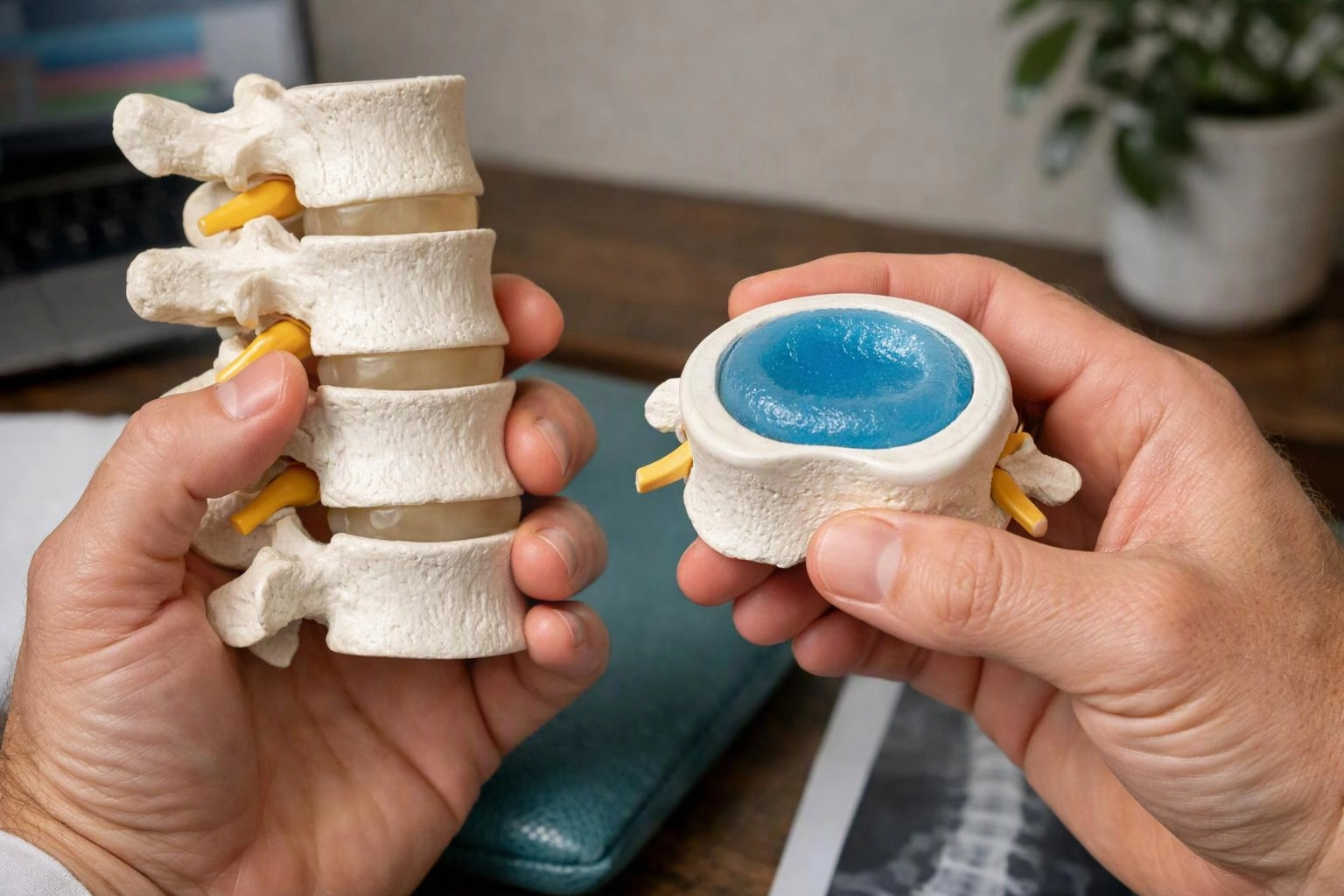
An intervertebral disc works as a movable cushion between neighboring vertebrae. Its firm outer ring contains a softer center, which helps spread pressure as the spine bends, twists, and bears everyday loads. The disc also helps preserve the openings that allow spinal nerves to pass from the spine.
Related glossary terms: Bulging Disc, Disc Degeneration, Lumbar Spine.
Disc tissue can change after strain, injury, or age-related wear. A disc may bulge outward, develop a tear, or lose some of its normal height. These changes do not always produce symptoms. During herniated disc treatment, clinicians consider the person’s symptoms, movement, strength, and nerve-related findings instead of judging the disc alone. Herniated Disc and Nerve Root describe related clinical concerns, not interchangeable body parts.

From the Arrowhead Clinic Chiropractor Garden City team
When we assess an intervertebral disc concern, we connect reported symptoms with movement patterns and relevant examination findings. Our team considers whether the presentation fits a disc-related problem and watches for signs that may require medical evaluation. We use that context to guide care for herniated disc concerns.
Intervertebral Disc in Practice: A Real-World Example
A person with a lumbar disc concern may report lower back pain that changes with sitting, bending, or walking. During herniated disc treatment, the examination may also consider leg symptoms and changes in movement that suggest nearby nerve irritation.
Related Terms
Bulging Disc
A bulging disc is an intervertebral disc that extends beyond its usual boundary as its outer…
Disc Degeneration
Disc Degeneration is a gradual change in the intervertebral discs that cushion the spine. The discs…
Lumbar Spine
Lumbar Spine is the lower section of the spinal column between the thoracic spine and the…
Nerve Root
A nerve root is the portion of a spinal nerve that branches from the spinal cord…
Arrowhead Clinic Chiropractor Garden City
Have Questions About Intervertebral Disc?
Contact Arrowhead Clinic Chiropractor Garden City for practical guidance on Intervertebral Disc and related chiropractor work in Garden City.