
What Is Degenerative Disc Disease?
Degenerative Disc Disease is a condition involving changes in the discs that cushion the bones of the spine. The discs can lose water and become thinner as they change. Some people have back or neck pain, while others have disc changes without pain.
Quick Facts About Degenerative Disc Disease
- Category
- Spinal disc condition
- Applies to
- Discs between spinal bones
- Common confusion
- Disc degeneration versus a bulging disc
- Also called
- DDD
- Often discussed with
- Spinal Decompression Therapy, Back Pain Treatment
Key Takeaways About Degenerative Disc Disease
- The name describes disc changes, not an infection.
- Symptoms and daily activities help put scan findings in context.
- A bulging disc and disc degeneration aren't the same diagnosis.
How Degenerative Disc Disease Works
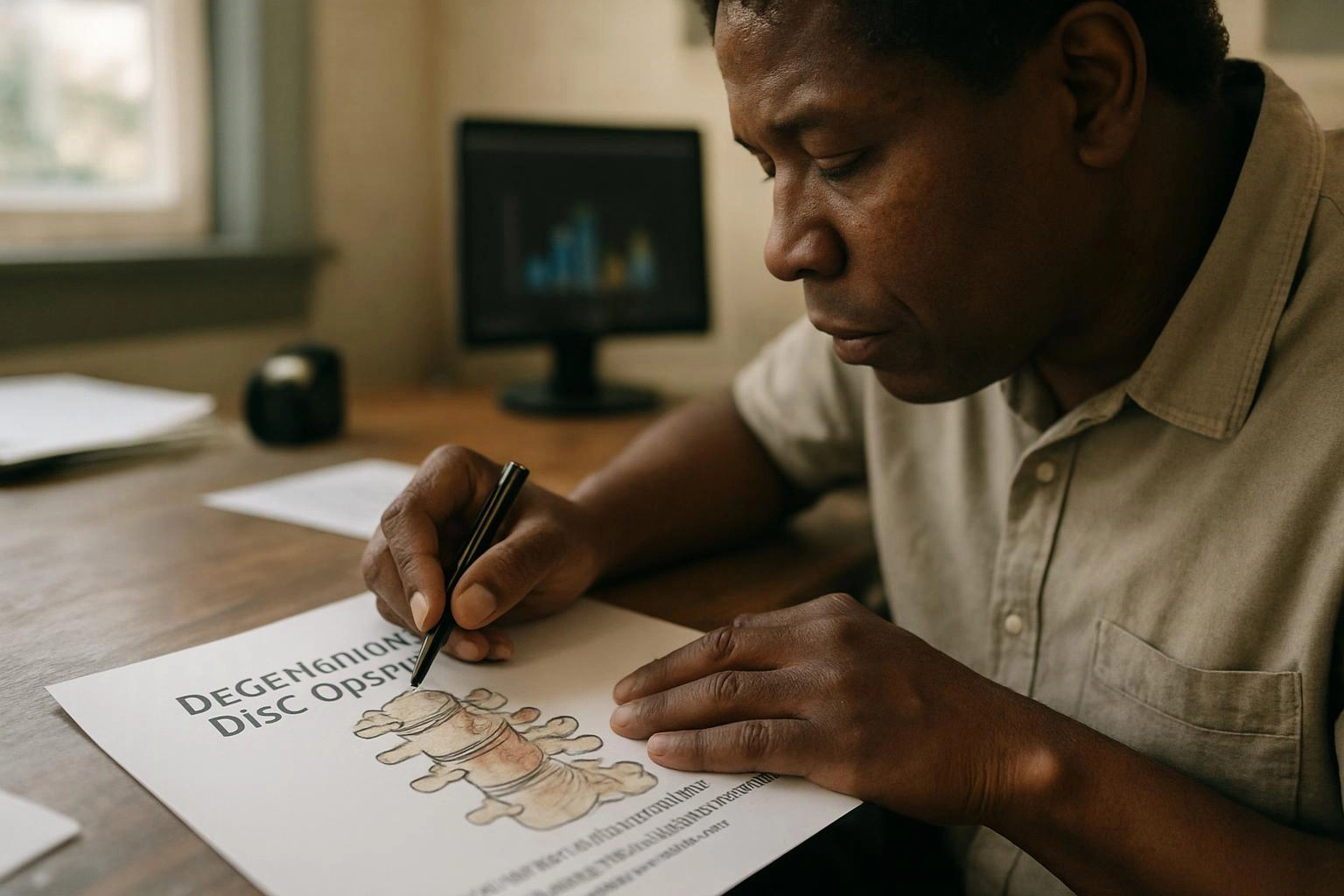
Degenerative Disc Disease affects how a spinal disc handles movement and pressure. A disc has a soft center and a tougher outer layer. Changes in these tissues can affect how the spine moves. Related service: Spinal Decompression Therapy.
Related glossary terms: Intervertebral Disc, Bulging Disc, Nerve Root.
Disc changes may also affect nearby structures. For example, a disc may bulge and place pressure on a nerve root. Nerve pressure can be linked to pain, tingling, or weakness in an arm or leg.
A scan can show changes in disc shape or height. Those findings don't always match where a person feels pain. A description of symptoms helps give the findings context.
Disc changes can occur in the neck or lower back. The location helps explain which movements or areas of the body may be affected. A diagnosis describes the disc changes, but it doesn't tell the whole story of a person's symptoms.
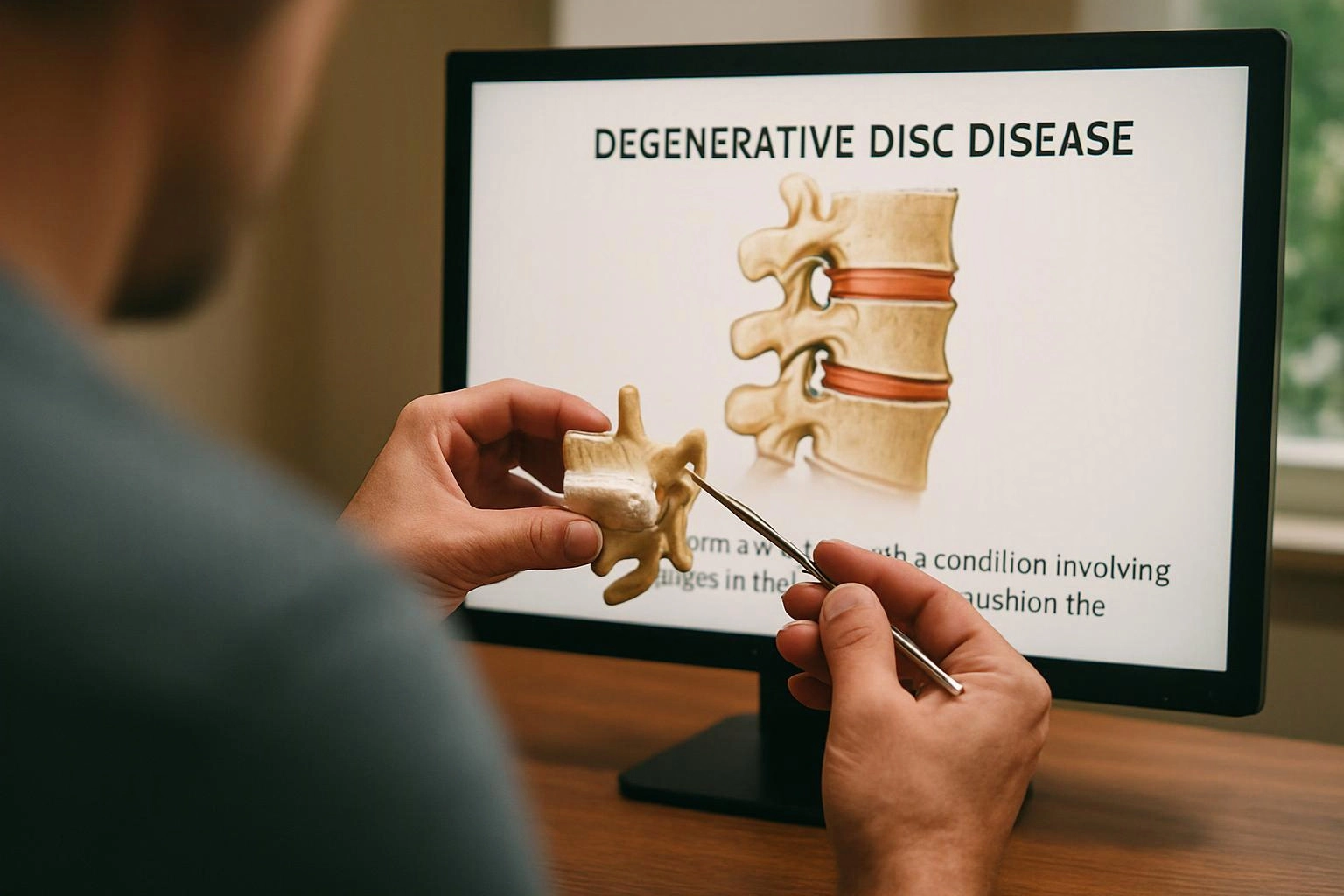
From the Arrowhead Clinic Chiropractor Garden City team
When we discuss spinal decompression therapy, we consider where you feel symptoms and which movements affect them. We also look at how the disc findings relate to your experience. That context helps us discuss whether the therapy fits your situation.
Degenerative Disc Disease in Practice: A Real-World Example
A person with lower back pain has disc changes noted on a scan. During a spinal decompression therapy discussion, the person describes how sitting affects the pain and asks how the treatment works.
Related Services
Related Terms
Intervertebral Disc
An intervertebral disc is a pad of tissue that sits between the bones of the spine.
Bulging Disc
A bulging disc is a spinal disc that extends beyond its usual edge.
Nerve Root
A nerve root is a bundle of nerve fibers that connects a spinal nerve to the spinal cord.
Lumbar Spine
The lumbar spine is the section of the backbone in your lower back.
Arrowhead Clinic Chiropractor Garden City
Have Questions About Degenerative Disc Disease?
Contact Arrowhead Clinic Chiropractor Garden City for practical guidance on Degenerative Disc Disease and related chiropractor work in Garden City.