After a Possible Whiplash Injury: Symptoms to Record and Red Flags
Whiplash symptoms are documented and assessed through a post-accident symptom checklist and red-flag review. Arrowhead Clinic Chiropractor Garden City reviews pain, stiffness, movement changes, headaches, dizziness, numbness, tingling, weakness, and symptom changes after a car accident to help determine appropriate next steps.
Request an EstimateWhat Symptoms Can Whiplash Cause?
Whiplash can cause neck pain, stiffness, headaches, reduced movement, and symptoms that extend into the shoulders, arms, or upper back. This neck injury can affect muscles, ligaments, nerves, and the cervical spine after a sudden force moves the head and neck.
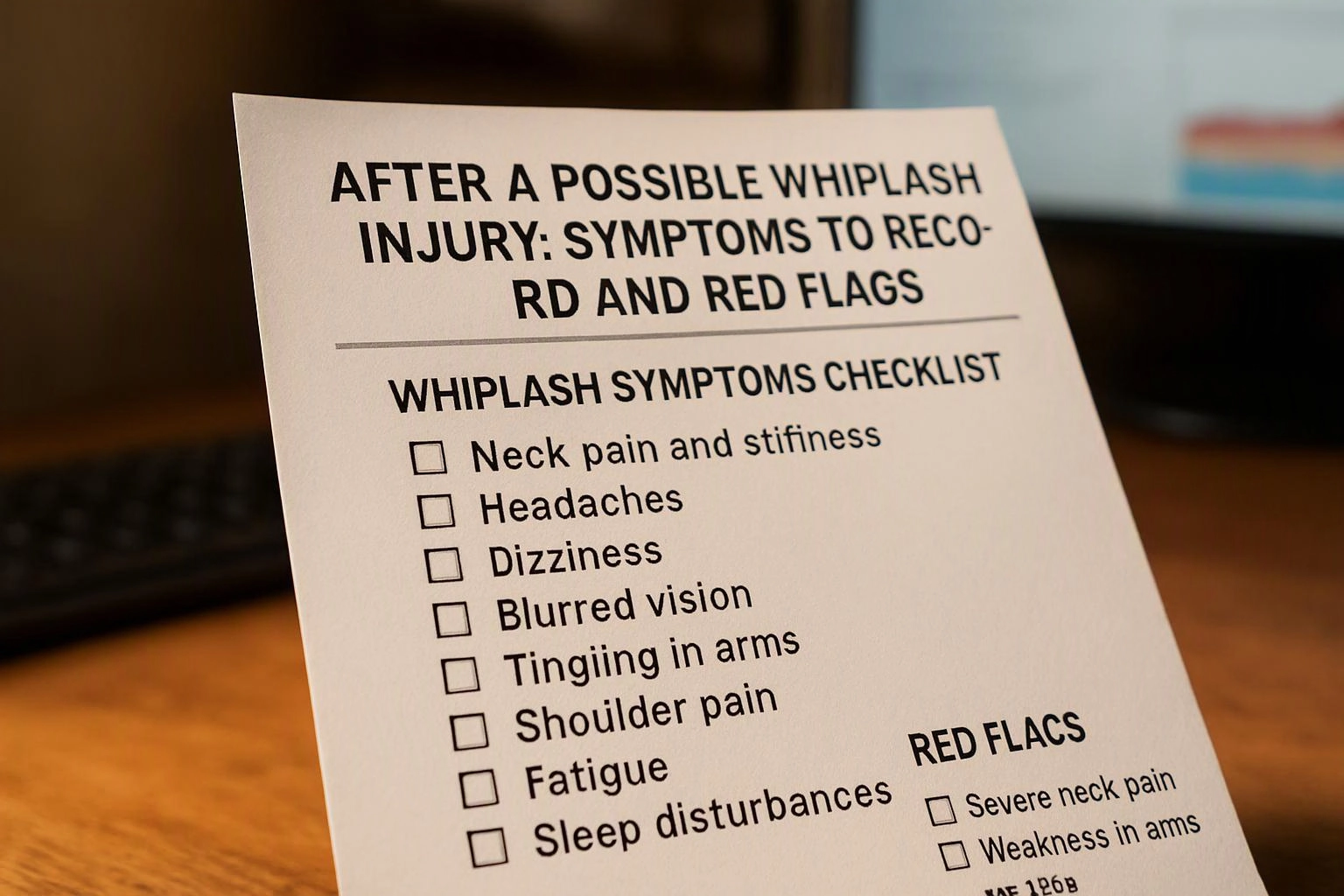
Common symptoms include neck stiffness, shoulder pain, upper back pain, and reduced range of motion. Some people also notice dizziness, numbness, tingling, or weakness. Symptoms may change with movement, sleep, work, or driving, so a clear record can help guide a medical evaluation.
Before You Record Symptoms, Note What Happened
Collision details give our team useful context for understanding a possible accident-related neck injury. Record the event while the details are fresh, but do not delay urgent medical care to complete a checklist.
During the Day, Track How Symptoms Change
Daily changes can show how symptoms respond to activity and rest. Use the same simple terms each time so your symptom timeline remains easy to review.
After the Accident, Keep a Clear Symptom Record
A symptom diary helps connect symptom onset, triggers, and progression after a car accident. Bring the record to appointments so our team can compare your history with examination findings.
Use This Whiplash Symptoms Reference Table
A reference table can make changing symptoms easier to describe. Use it with your symptom diary, not as a diagnosis.
| Symptom or change | What to record | Why it matters during review |
|---|---|---|
| Neck pain | Pain location, severity, triggers, and changes | Shows the main area and behavior of the neck injury |
| Neck stiffness | Movements that feel restricted or uncomfortable | Helps describe movement limitation |
| Headache | Location, pattern, triggers, and related symptoms | Connects head symptoms with the injury history |
| Dizziness | Timing and effects on balance or walking | Identifies possible balance problems that need attention |
| Numbness or tingling | Body area, spread, frequency, and changes | Documents possible nerve symptoms |
| Weakness | Affected arm, hand, leg, or other function | Helps identify neurological symptoms that may need prompt care |
| Concentration changes | Tasks that feel harder or require extra effort | Adds detail about changes after the collision |
| Sleep changes | Sleep disruption, waking, or uncomfortable positions | Shows how symptoms affect daily function |
| Symptom timing | When symptoms began and how they progressed | Creates a clear symptom timeline |
Which Whiplash Red Flags Need Urgent Medical Attention?
Whiplash symptoms involving new weakness, significant numbness, loss of coordination, confusion, fainting, or trouble breathing require urgent medical attention. These red flags can signal a serious injury that needs emergency care.
Do not wait for a routine chiropractic appointment when severe or worsening symptoms appear. Contact emergency services or go to an emergency department for immediate help when these warning signs occur.
When Should You Seek Care for Tingling or Weakness?
Tingling or weakness after a collision should be medically evaluated promptly, especially when symptoms spread, worsen, or affect walking, balance, or hand function. These nerve symptoms may require urgent medical evaluation.
Spinal cord warning signs include changing strength, loss of sensation, poor coordination, or difficulty controlling movement. Seek emergency care for sudden or severe neurological symptoms, and tell the care team when they began and how they progressed.
How Arrowhead Clinic Chiropractor Garden City Reviews a Possible Whiplash Injury
Arrowhead Clinic Chiropractor Garden City reviews the collision history, symptom timeline, movement, and neurological warning signs before deciding whether chiropractic care is appropriate or medical evaluation is needed.
Our team reviews your injury history and observes posture and range of motion. We also complete neurological screening and a musculoskeletal assessment to understand how the neck, shoulders, upper back, and related tissues are functioning.
When findings suggest a need for medical evaluation, we explain the concern and support referral for appropriate care. A chiropractic evaluation is not a substitute for emergency care when red flags are present.
What to Bring to a Whiplash Evaluation
A symptom record gives our team a clearer view of your injury and daily limits. Bring the documents that show what happened, what you noticed, and what care you have already received.
Useful items include your symptom record, accident information, medical records, medication list, imaging reports, and insurance documentation. The Auto Accident Chiropractic Treatment Checklist: Documents and Information to Prepare can also help you organize these details before your visit.
How Whiplash Treatment Fits Into Your Next Steps
Whiplash Treatment begins with a chiropractic evaluation, careful care planning, and symptom monitoring. Our team uses your history and examination findings to decide whether conservative chiropractic care fits your needs.
Auto Accident Injury Treatment may include follow-up assessment and changes to the care plan as symptoms progress. We also explain when referral or additional medical evaluation is appropriate. You can review our Whiplash Treatment service page for more information about this care pathway.
Keep recording changes between visits. Contact our team through the page link when you are ready to discuss your symptoms and next steps.
Questions About Recording Whiplash Symptoms
Can whiplash symptoms appear later after a car accident?
Yes, whiplash symptoms can appear later after a car accident. Arrowhead Clinic Chiropractor Garden City recommends recording when each symptom begins, how it changes, and whether activity affects it, while seeking prompt medical care for red flags.
Should I document whiplash symptoms for an insurance claim?
Yes, clear injury documentation can help show when symptoms began and how they affected daily activities. Keep your symptom diary, accident information, medical records, imaging reports, medication list, and appointment details together.
Can whiplash cause tingling in the arms?
Yes, whiplash can be associated with arm tingling, but tingling is a nerve symptom that deserves medical evaluation. Seek urgent care when tingling spreads, worsens, or occurs with weakness, loss of sensation, poor balance, or difficulty walking.
Can whiplash cause headaches or dizziness?
Yes, whiplash can cause headaches or dizziness after a collision. Record the timing, triggers, balance problems, and related symptoms, and seek urgent medical care if dizziness occurs with fainting, confusion, trouble speaking, or worsening neurological symptoms.
Arrowhead Clinic Chiropractor Garden City reviews your symptom record, screens for warning signs, and helps determine the next appropriate step after a possible whiplash injury.
Related Resources
Chiropractor Attorney Referrals vs. Choosing Your Own Attorney
Compared ToChiropractor vs. Physical Therapy for Whiplash: Questions Before Choosing
What Goes With ItAuto Accident Injury Treatment and Whiplash Care: What Comes First?
Compared ToAuto Accident Chiropractic Care vs. a Routine Chiropractic Visit