After a Chiropractic Adjustment: Symptoms to Monitor and Report
After a chiropractic adjustment, mild and temporary soreness can occur, but worsening pain, new numbness, weakness, severe headache, or other sudden symptoms need prompt medical attention. Arrowhead Clinic Chiropractor Garden City explains what to monitor, what to report to our team, and when to seek urgent care.
Request an EstimateWhat Should You Monitor After a Chiropractic Adjustment?
Post-adjustment symptoms should be monitored for their intensity, location, timing, and change over time. Mild soreness may reflect a short-term muscle response, while pain that spreads, increases, or affects normal function needs closer attention.
Note symptoms involving the spine, joints, muscles, nerves, or limbs. Pay special attention to neurological symptoms such as numbness, tingling, weakness, dizziness, or changes in coordination.
Our team uses your symptom pattern to decide whether routine follow-up, a change in care, or medical evaluation is the safer next step. You can learn more about the service on our Chiropractic Adjustment page.
Before Your Chiropractic Adjustment: Record Your Baseline
Baseline symptoms give our team a clear point of comparison before chiropractic care begins. Record how you feel at rest and during the movements that normally affect you.
This information helps us separate a familiar symptom from a new change. It also improves patient communication during the adjustment and during follow-up.
During Your Chiropractic Adjustment: Communicate Changes
Patient communication during an adjustment helps us respond to pressure, positioning, and discomfort as they occur. Tell our team about any unexpected change instead of waiting until the visit ends.
We can adjust the communication and assessment process when you describe a change clearly. Your feedback is part of safe, informed chiropractic care.
After Your Chiropractic Adjustment: Track How You Feel
Post-adjustment monitoring means tracking how symptoms behave after the visit and whether they improve, stay stable, or worsen. Write down changes while they are easy to describe.
Our team reviews symptom progression instead of focusing on one isolated sensation. Contact us with the details when a symptom is new, persistent, or becoming more intense.
Which Symptoms Can Be Mild After an Adjustment?
Mild soreness or temporary stiffness can occur after an adjustment, but symptoms that intensify, spread, or interfere with normal function should be reported. Localized tenderness may also reflect a temporary muscle response.
A mild response should remain manageable and should not develop into a new neurological problem. We ask about the symptom location, intensity, timing, and progression before deciding whether follow-up is appropriate.
Contact our team when soreness changes into worsening pain, radiating pain, new numbness, or weakness. A reassessment helps us determine whether the symptom fits the expected response or needs medical attention.
Which Red Flags Need Prompt Medical Attention?
Severe or worsening pain, new numbness or weakness, loss of coordination, fainting, trouble speaking, trouble breathing, or a sudden severe headache require prompt medical attention.
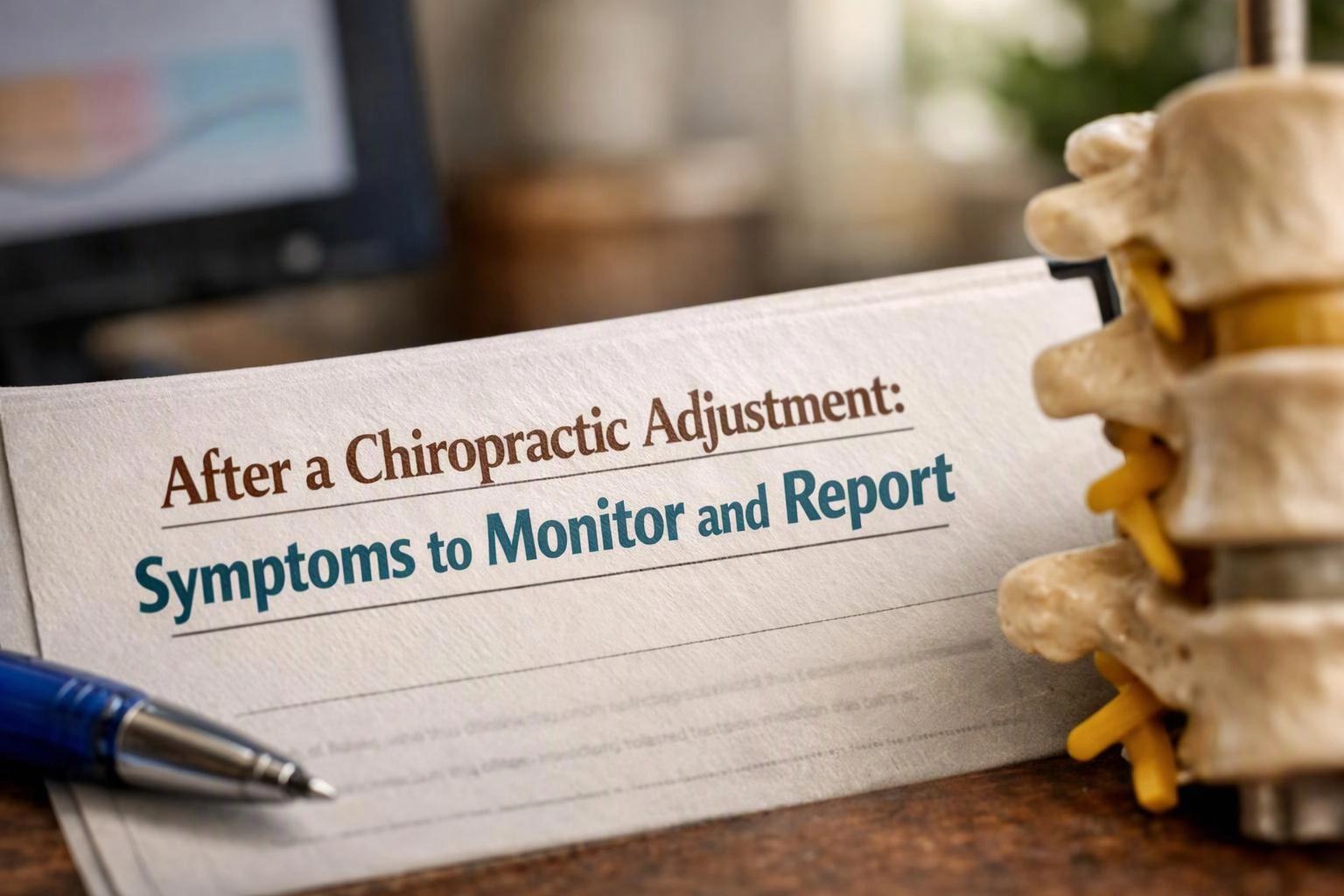
These warning signs can indicate a medical concern that needs urgent assessment. Do not wait for a routine chiropractic follow-up when symptoms are severe, sudden, or rapidly changing.
Seek urgent care when any red flag appears. Our team can help explain what to report, but emergency symptoms require immediate medical attention.
Is Worsening Pain After an Adjustment a Concern?
Yes, worsening pain after an adjustment is a concern when the pain is severe, spreads, causes functional changes, or comes with neurological symptoms.
Pain intensity and location matter, but so does the change from your baseline. Radiating pain, new weakness, numbness, or difficulty using a limb raises the need for prompt post-adjustment reassessment.
We review what changed, when it started, and how it affects movement. We then determine whether chiropractic follow-up is appropriate or whether medical evaluation is needed.
When Should You Report Numbness or Weakness?
New or increasing numbness, tingling, or weakness after an adjustment should be reported promptly and assessed urgently when severe or associated with other neurological changes.
Changes in limb function can affect walking, balance, gripping, or lifting. Tell our team where the symptom occurs, whether it is spreading, and whether it is changing quickly.
We use that information to decide whether a follow-up assessment is suitable. Severe neurological changes require urgent medical evaluation.
What Information Should You Report to Our Chiropractic Team?
Report when the symptom started, where it occurs, how it has changed, what triggers it, and whether numbness, weakness, dizziness, or other symptoms occur with it.
Include the recent adjustment in your description, along with your baseline symptoms and any new functional changes. Clear details help us understand symptom onset and progression.
Useful information includes pain location, symptom intensity, movement limits, associated symptoms, and anything that makes the symptom better or worse. We use this symptom history to plan the next safe step.
How Arrowhead Clinic Chiropractor Garden City Connects Post-Adjustment Symptoms With Chiropractic Care
Arrowhead Clinic Chiropractor Garden City reviews the symptom history, checks relevant findings, and determines whether chiropractic follow-up or medical evaluation is appropriate.
Our chiropractic assessment considers the adjustment, your baseline, the symptom pattern, and any functional changes. We may use neurological screening to understand whether numbness, tingling, weakness, or coordination changes need a different level of care.
We use these findings to guide treatment planning and decide whether to continue, modify, or pause chiropractic adjustment care. We explain the reasoning clearly so you know what to report and what to do next.
What Should You Do If Symptoms Feel Urgent?
Seek urgent medical care for severe or rapidly worsening symptoms, major neurological changes, trouble breathing, fainting, or other signs of a medical emergency.
Emergency symptoms can include severe pain, sudden weakness, trouble speaking, loss of coordination, or a sudden severe headache. Contact emergency services when immediate help is needed.
Do not drive yourself if dizziness, weakness, fainting, or impaired coordination makes travel unsafe. After urgent care, share the medical guidance with our team so we can coordinate the next appropriate step.
Questions About Symptoms After a Chiropractic Adjustment
Can a chiropractic adjustment cause soreness?
Yes, a chiropractic adjustment can cause mild, localized soreness or temporary stiffness. Arrowhead Clinic Chiropractor Garden City reviews soreness based on its intensity, location, timing, and progression.
Should I stop chiropractic care if I feel worse after an adjustment?
Do not make that decision without reporting the change and receiving a reassessment. Worsening pain, new neurological symptoms, or functional changes may require medical evaluation before further care.
Can dizziness after a chiropractic adjustment be serious?
Yes, dizziness after a chiropractic adjustment can be serious when it is severe, sudden, persistent, or associated with fainting, weakness, trouble speaking, or loss of coordination. Seek urgent medical care when those symptoms occur.
Should I seek emergency care for a headache after a chiropractic adjustment?
Seek emergency care for a sudden severe headache or a headache with fainting, weakness, trouble speaking, loss of coordination, or trouble breathing. A mild headache without warning signs should still be reported for appropriate guidance.
Contact Arrowhead Clinic Chiropractor Garden City to discuss symptoms after a chiropractic adjustment and determine the appropriate next step.
Get a Free EstimateRelated Resources
Chiropractor vs. Physical Therapy for Sciatica: Choosing a Starting Point
Compared ToChiropractor vs. Physical Therapist for Neck Pain: What to Compare
Compared ToChiropractic Care vs. Physical Therapy for Posture Concerns
Compared ToChiropractic Visit Cost Factors to Clarify Before Booking in Garden City