Sports Injury Symptoms: A Checklist Before Returning to Activity
Sports injury symptoms such as pain, swelling, weakness, or unstable movement can mean you aren't ready to return. Arrowhead Clinic Chiropractor Garden City can assess your symptoms and help guide a return to activity. We offer upfront pricing.
Request an EstimateWhat symptoms should you check before returning to activity?
Sports injury symptoms to check include pain, swelling, and difficulty moving. Also notice weakness, poor balance, or a joint that feels unstable.
Use this return-to-play checklist to describe what you're feeling. We can assess concerns before you resume activity.
Does feeling no pain mean you're ready to return?
No, a lack of pain alone doesn't confirm that a sports injury has healed. Strength, control, and the demands of your sport also matter.
Pain-free movement may feel reassuring, but muscles and joints may still lack strength or stability. We consider those factors alongside the movements your activity requires.
What can common sports injury symptoms mean?
Sports injury symptoms can point to different problems, but symptoms alone don't establish a diagnosis. We review the pattern of symptoms and assess how the injured area moves.
| Symptom | What it may mean for activity |
|---|---|
| Pain and swelling | The injured area may not be tolerating activity. Pause and seek an assessment. |
| Stiffness and limited movement | Movement may be restricted. We check how that limitation affects your activity. |
| Weakness and instability | Muscles or ligaments may not support movement as expected. We assess control and consider whether a referral is needed. |
| Numbness or tingling | These sensations can involve a nerve. Stop activity and seek medical assessment. |
Tell us when symptoms appear and what makes them worse. That pattern helps guide our assessment, but it doesn't confirm a diagnosis on its own.
Which sports injury symptoms need urgent medical care?
Sports injury symptoms such as confusion, loss of consciousness, or a visibly deformed limb need urgent medical attention. New or worsening weakness also needs urgent assessment.
A suspected concussion needs medical assessment. Stop playing after a possible head injury, even if symptoms seem mild. Confusion, loss of consciousness, or a severe or worsening headache calls for emergency care.
A suspected fracture or deformity also needs urgent medical care. Severe neck or back pain after an injury needs urgent attention, especially with weakness. Call emergency services for serious symptoms, and don't return to activity.
How do we assess readiness after a sports injury?
We assess sports injury readiness by reviewing symptoms and checking movement and strength. We consider the demands of your activity and refer you when appropriate.
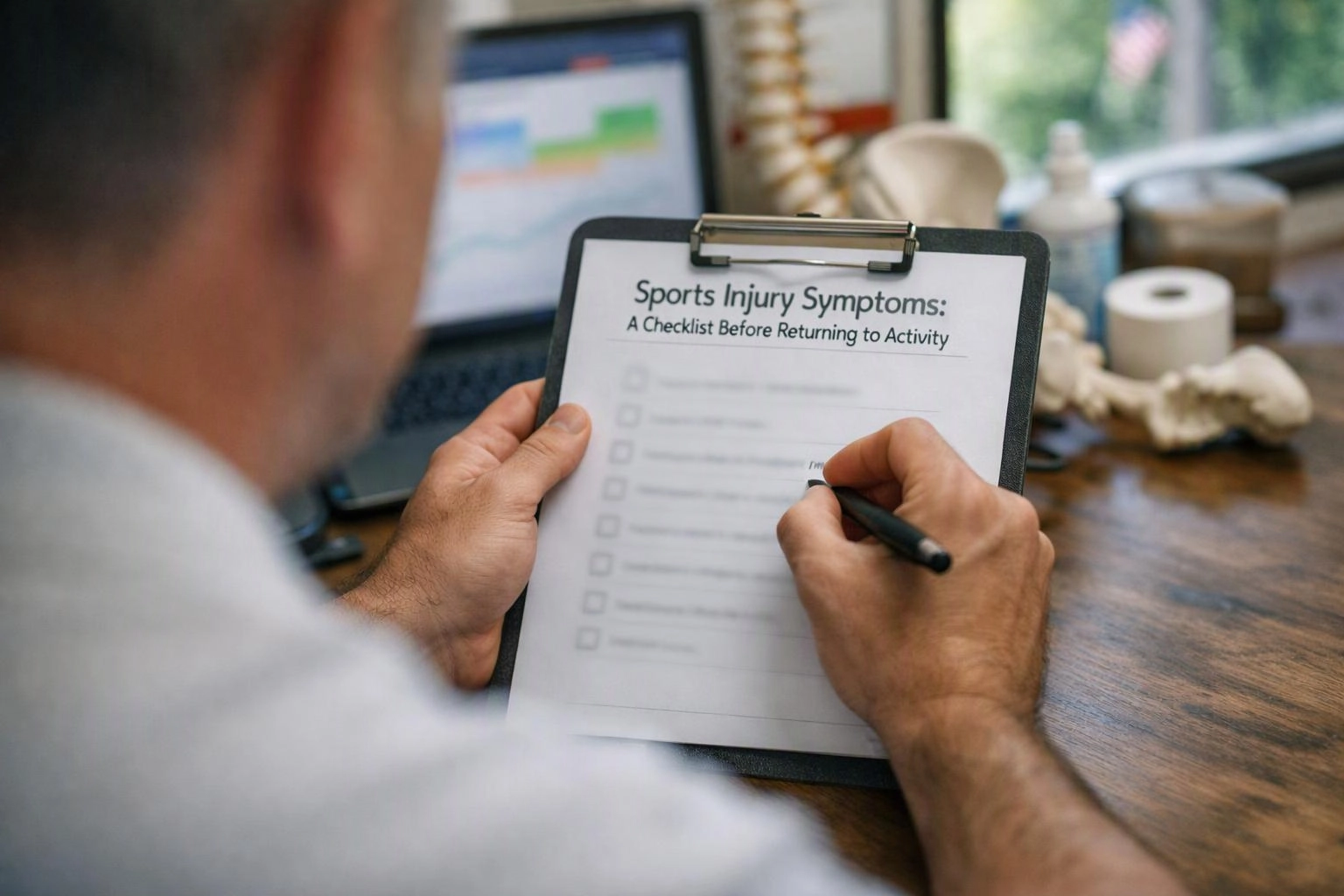
Our sports injury assessment starts with your injury history and the symptoms you've noticed. We also consider balance and stability during the physical assessment. If your symptoms call for medical care outside our assessment, we'll recommend a referral.
How should you return to activity after a sports injury?
A sports injury return plan should match your symptoms and activity demands. Increase activity gradually, and stop if symptoms return or worsen.
We can help you plan a gradual return to activity based on your assessment. Our Sports Injury Treatment approach considers the movement your sport requires. Tell us about any symptoms you notice as activity increases.
What if symptoms return during activity?
Returning sports injury symptoms are a reason to stop the activity and seek reassessment. We can review the symptoms and help adjust your plan.
Recurring pain or swelling may mean the activity was too demanding for the injured area. We can reassess your movement and discuss changes to your activity progression.
What Are the Key Specifications to Know?
- Topic Focus
- Sports Injury Symptoms: A Checklist Before Returning to Activity
- Related Core Service
- Chiropractor
- Evaluation Method
- On-Site Inspection & Written Scope
- Compliance Standard
- Local Building Code & Manufacturer Specs
Questions About Sports Injury Symptoms
Can you return to sports with swelling?
Swelling is a reason to pause and seek an assessment before returning to sports. Arrowhead Clinic Chiropractor Garden City can review the swelling and help you decide what activity is appropriate.
Should you play through pain after an injury?
No, don't play through pain after an injury. Stop the activity and seek an assessment so we can help you adjust your return plan.
For help assessing sports injury symptoms, contact Arrowhead Clinic Chiropractor Garden City. We'll discuss your concerns and help you plan your next step.
Request a QuoteRelated Resources
Spinal Decompression vs. Chiropractic Adjustment: Which Is the Better Fit?
Everything About ItChiropractor vs. Physical Therapist for Back Pain: How to Choose
Everything About ItChiropractor vs. Physical Therapy for Sciatica: Choosing a Starting Point
Everything About ItChiropractor vs. Physical Therapist for Neck Pain: What to Compare