Spinal Decompression vs. Physical Therapy for Disc-Related Symptoms
Spinal decompression uses gentle traction, while physical therapy focuses on movement and function. Arrowhead Clinic Chiropractor Garden City considers your symptoms and health history when discussing which approach may fit.
Request an EstimateWhich is better for disc-related symptoms: spinal decompression or physical therapy?
Physical therapy may fit goals involving movement and function, while spinal decompression may be an option for selected symptoms. Neither approach is right for everyone.
We consider your symptom pattern and treatment goals during a clinical assessment. We also discuss how your symptoms respond to care and adjust recommendations as needed.
How do spinal decompression and physical therapy differ?
Spinal decompression therapy uses traction to gently stretch the spine, while physical therapy uses movement and other rehabilitation methods. We consider the goals and limits of each approach when discussing your options.
| Feature | Spinal decompression | Physical therapy |
|---|---|---|
| Method | Gentle mechanical traction stretches the spine. | Guided exercise and other rehabilitation methods support movement. |
| Goal | May help relieve selected symptoms. | Supports mobility, strength, and daily function. |
| Your participation | You report how traction feels during care. | You take an active role in guided movement and report your response. |
| Limits | Relief isn't guaranteed, and traction isn't safe for everyone. | Exercises need to fit your symptoms and may need adjustment. |
Can spinal decompression relieve disc-related symptoms?
Yes, spinal decompression may help some people with disc-related symptoms, but relief isn't guaranteed. We review your health history before discussing whether traction is appropriate.
An intervertebral disc is a cushion between the bones of the spine. A herniated disc can irritate a nearby nerve root and cause pain or other nerve symptoms.
Nonsurgical spinal decompression uses traction to gently stretch the spine. We check for treatment contraindications, such as a spinal fracture or spinal instability, that may make traction unsafe.
How can physical therapy help with disc-related symptoms?
Physical therapy can help improve movement and daily function while you manage disc-related symptoms. Guided exercise can support mobility and strength.
We consider how back pain, neck pain, or leg pain affects your activities. We also discuss your response to movement so your care plan can fit your symptoms.
Can spinal decompression and physical therapy be used together?
Yes, spinal decompression and physical therapy can be part of the same care plan when they fit your symptoms and health history. We discuss your treatment goals and check how you respond to care.
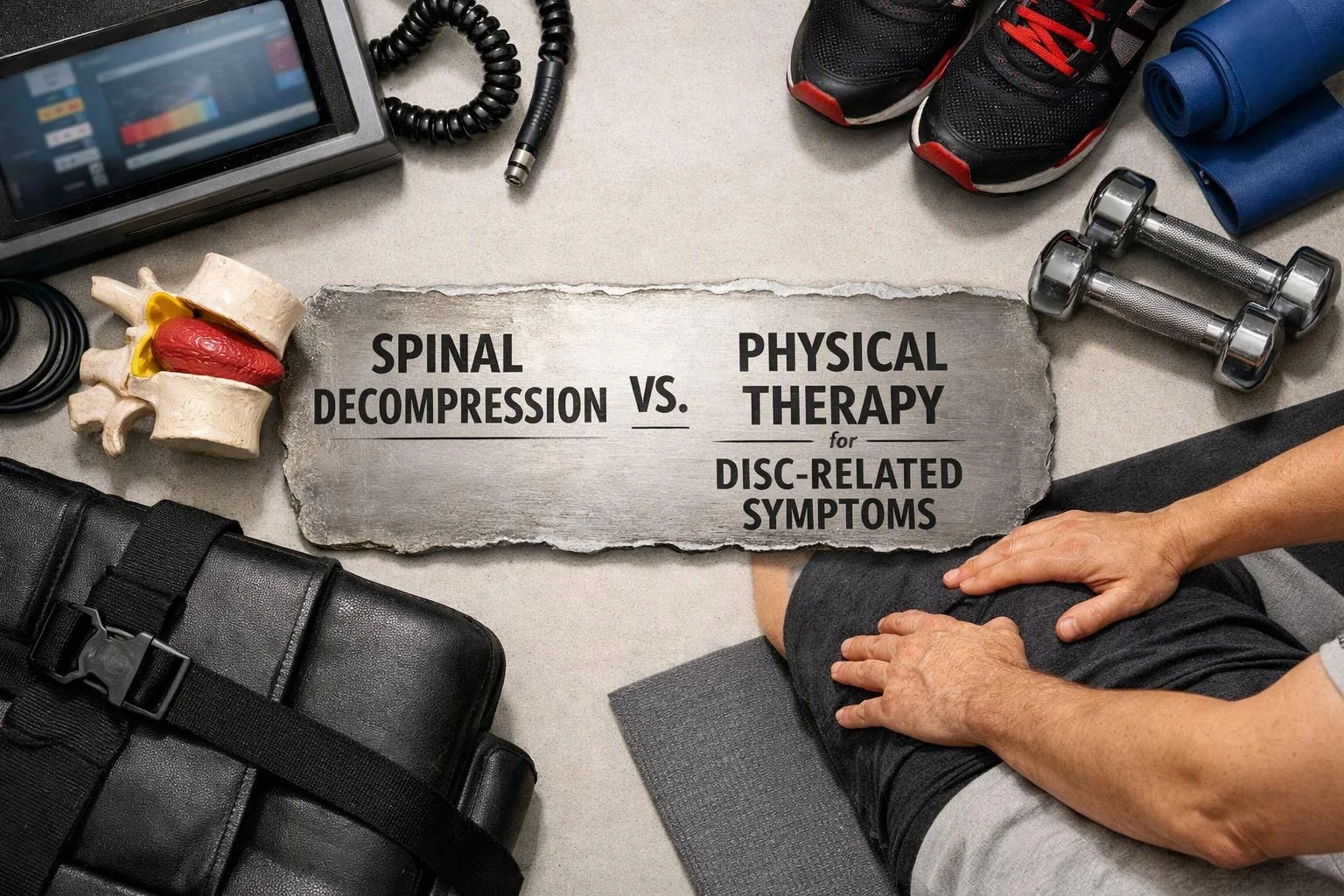
Combined care may address symptom relief alongside movement and function. We don't assume that combining approaches is right for everyone.
What should you tell us before choosing a treatment?
Tell us where your symptoms occur, how they affect daily life, and what care you've tried. We consider your health history and goals when discussing treatment options.
Tell us about numbness or weakness, even if pain is your main concern. We use those details to guide our assessment and discuss whether further medical evaluation is needed.
When do disc-related symptoms need urgent medical attention?
Disc-related symptoms need urgent medical assessment if you develop new bladder or bowel control problems, numbness around the groin or saddle area, or new or worsening leg weakness. Seek emergency care for these neurological warning signs.
These symptoms can signal serious nerve pressure. We don't recommend waiting for a chiropractic appointment to have them assessed.
What changes the price of decompression or physical therapy?
The assessment and services in your care plan can change the price of decompression or physical therapy. We offer upfront pricing; ask us for a quote and what it includes.
We can explain how the recommended services shape your quote. Ask about the assessment and any treatment included before you decide.
What Are the Key Specifications to Know?
- Topic Focus
- Spinal Decompression vs. Physical Therapy for Disc-Related Symptoms
- Related Core Service
- Chiropractor
- Evaluation Method
- On-Site Inspection & Written Scope
- Compliance Standard
- Local Building Code & Manufacturer Specs
Questions About Disc Symptoms and Treatment
Can a herniated disc cause sciatica?
Yes, a herniated disc can cause sciatica when it irritates a nerve involved in the sciatic nerve pathway. Arrowhead Clinic Chiropractor Garden City considers your symptoms and health history when discussing care.
Does a herniated disc always require surgery?
No, a herniated disc doesn't always require surgery. Conservative care may be an option, but urgent warning signs need emergency assessment.
Arrowhead Clinic Chiropractor Garden City can discuss your symptoms and treatment goals with you. Contact us to ask about care and request a quote.
Request a QuoteRelated Resources
Spinal Decompression vs. Chiropractic Adjustment: Which Is the Better Fit?
Everything About ItChiropractor vs. Physical Therapist for Back Pain: How to Choose
Everything About ItChiropractor vs. Physical Therapy for Sciatica: Choosing a Starting Point
Everything About ItChiropractor vs. Physical Therapist for Neck Pain: What to Compare