Pregnancy-Related Back Discomfort: Questions to Raise Before Care
Prenatal chiropractic care for pregnancy-related back discomfort calls for questions about safety, symptoms, techniques, prenatal coordination, and follow-up; Arrowhead Clinic Chiropractor Garden City uses these topics to guide a prenatal chiropractic care discussion.
Request an EstimateWhat This Pregnancy Back Pain Chiropractic Checklist Covers
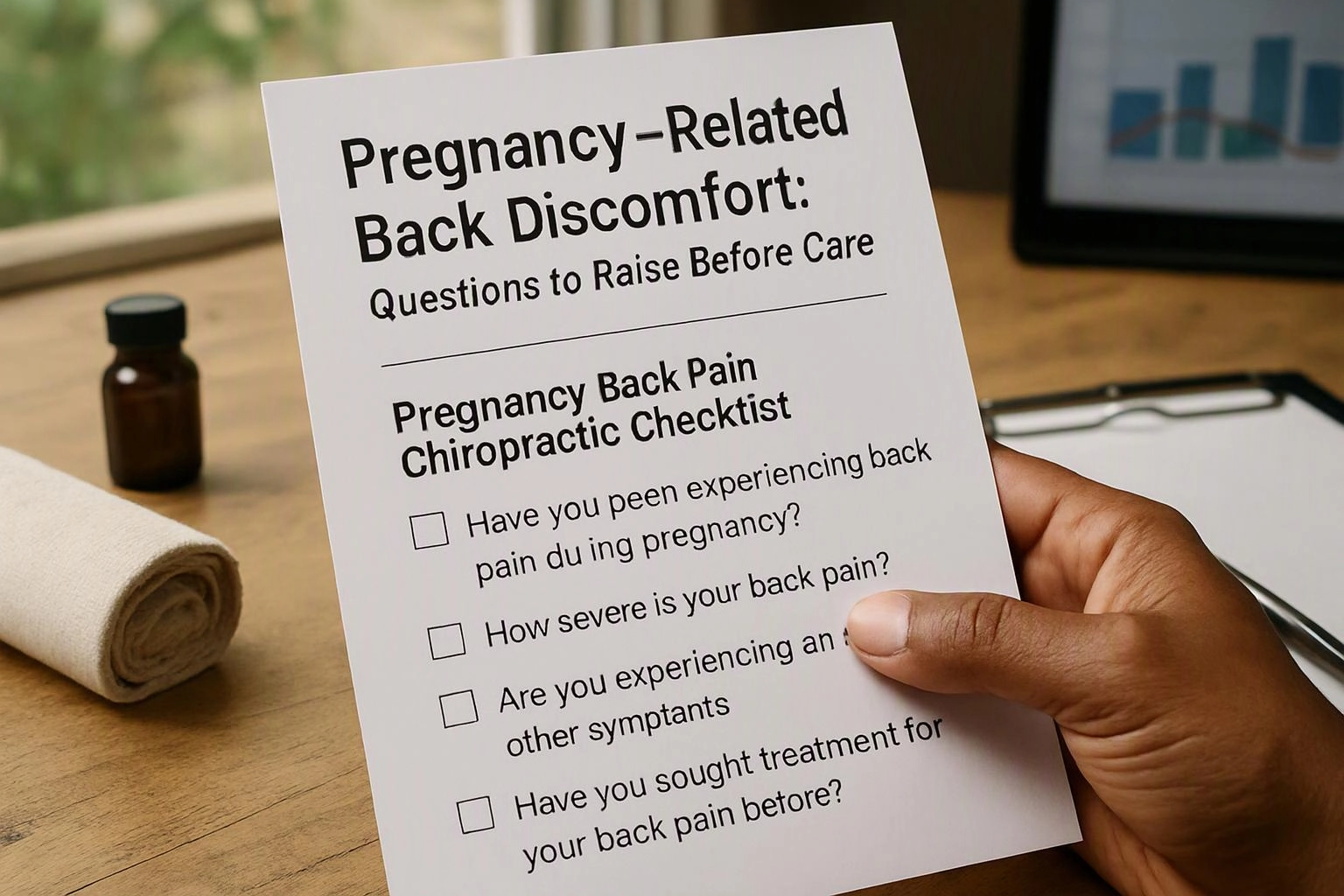
Pregnancy-related back discomfort can involve the low back, pelvis, hips, or areas affected by changing posture. A chiropractic consultation helps organize your symptom history and questions before any care decision is made.
We use the discussion to understand your pregnancy history, medical history, and current obstetric care. We also encourage you to raise care questions with your obstetric provider so the plan reflects your health needs and pregnancy stage.
Our guide covers what to bring, what to ask about assessment and positioning, which pregnancy warning signs need prompt medical attention, and how follow-up communication can work. For broader information about our approach, see Prenatal Chiropractic Care.
Before Care: Questions to Prepare for a Chiropractic Visit
Pregnancy history gives our team important context before a chiropractic evaluation. Prepare clear details about your symptoms, medical history, and obstetric care so we can discuss suitable next steps.
Bring questions that help you understand the purpose of the assessment and the reasons behind any proposed technique. Your answers also help us decide when care coordination with your obstetric provider is appropriate.
These answers do not replace medical guidance from your obstetric provider. We use them to make the visit more focused and to identify questions that may need medical review first.
Can You See a Chiropractor While Pregnant?
Yes, pregnancy can be compatible with chiropractic care when the care plan accounts for the pregnancy and the patient’s obstetric and medical history; we recommend coordinating questions about care with the obstetric provider.
A chiropractic evaluation should consider symptoms, pregnancy stage, medical history, physical findings, and possible contraindications. We explain the proposed approach, answer questions, and support informed consent before care begins.
Our team also considers whether the symptoms fit a musculoskeletal concern or need another medical assessment. Obstetric clearance or direct coordination may be important when your history or symptoms create added concern.
During Care: Questions About Assessment and Technique
Patient positioning affects comfort and how we complete the physical examination. Ask how we will assess posture, spinal movement, pelvic mechanics, and your response during the visit.
We adjust the discussion and technique to your symptoms and comfort. The goal is a careful prenatal adjustment that fits the findings and the information shared by you and your obstetric provider.
Comfort is part of the assessment, not an afterthought. We want you to understand each step and tell us promptly if your symptoms or comfort change during care.
Which Pregnancy Symptoms Need Your Obstetric Provider?
Pregnancy warning signs such as vaginal bleeding, fluid leakage, contractions, severe abdominal pain, or decreased fetal movement should be raised with the obstetric provider promptly rather than treated as routine back discomfort.
These symptoms can require medical assessment because they may not be explained by ordinary musculoskeletal discomfort. We recommend contacting your obstetric provider promptly when any of these warning signs occur.
Back discomfort with numbness, weakness, or a major mobility change also deserves clear disclosure. We use that information to decide whether the planned discussion should pause for medical coordination.
After Care: Questions About Follow-Up and Communication
Symptom monitoring helps us understand your post-treatment response and decide whether the care plan needs reassessment. Ask what changes to watch for and how to communicate them.
Follow-up care should reflect your response, pregnancy stage, and any updated guidance from your obstetric provider. We use that information to keep the plan focused and appropriate.
Do not ignore a meaningful change after a visit. Tell us what changed, when it changed, and what activity or position was involved so we can review the next step with you.
What Should You Tell Us About Pregnancy-Related Back Discomfort?
You should tell us when the discomfort began, where it travels, what changes it, which symptoms accompany it, and what your obstetric provider has advised.
Include the pain severity, pain pattern, and any effects on walking, standing, sleeping, or daily movement. Tell us about numbness, weakness, mobility changes, previous pregnancy complications, and any relevant medical history.
Clear details help us separate common postural back strain from symptoms that may need further review. Our team uses your account alongside the physical assessment and pregnancy history when discussing care options.
How We Match Prenatal Chiropractic Care to Your Questions
Our care plan connects your symptom history and pregnancy stage with the clinical assessment, positioning, technique selection, care coordination, and follow-up plan.
The table shows how each part of the discussion supports a clear and informed decision. We adjust the conversation when new symptoms or obstetric guidance changes the clinical picture.
| Discussion area | What we review | Why it matters |
|---|---|---|
| Symptom history | Onset, location, pattern, triggers, and accompanying symptoms | Clarifies the concern being assessed |
| Pregnancy stage | Pregnancy history and current obstetric guidance | Places care questions in the right clinical context |
| Clinical assessment | Posture, spinal movement, pelvic mechanics, and comfort | Guides the discussion of suitable techniques |
| Positioning and technique selection | Supportive positioning and patient feedback | Keeps comfort and informed consent central |
| Care coordination | Questions or guidance involving the obstetric provider | Supports communication across prenatal care |
| Follow-up plan | Post-treatment response, home positioning, and activity changes | Creates a clear way to monitor and reassess symptoms |
Arrowhead Clinic Chiropractor Garden City uses this structured conversation to keep prenatal chiropractic care centered on your questions, comfort, and clinical information. You can request an appointment through our contact page.
Questions About Pregnancy Back Discomfort Before Care
What information should I bring to a prenatal chiropractic appointment?
Arrowhead Clinic Chiropractor Garden City recommends bringing your pregnancy history, medical history, symptom details, current medicines, and guidance from your obstetric provider.
What happens if back discomfort changes after a prenatal chiropractic visit?
Changed back discomfort after a prenatal chiropractic visit should be reported to our team with details about timing, location, intensity, and accompanying symptoms. Pregnancy warning signs should be raised with your obstetric provider promptly.
Can pregnancy back pain be caused by something that needs urgent medical attention?
Yes, pregnancy back pain can occur with symptoms that need prompt medical attention, including vaginal bleeding, fluid leakage, contractions, severe abdominal pain, or decreased fetal movement. Contact your obstetric provider promptly when these symptoms occur.
Pregnancy-related back discomfort deserves a careful conversation before care begins. Arrowhead Clinic Chiropractor Garden City can review your questions, discuss the assessment process, and help you plan the next step with appropriate obstetric coordination.
Get a Free Estimate