A Child’s Back or Neck Pain: What Caregivers Should Note
A child back pain symptoms checklist should record pain location, timing, triggers, related symptoms, and changes in movement; Arrowhead Clinic Chiropractor Garden City uses these details to guide a careful pediatric chiropractic evaluation.
Request an Estimate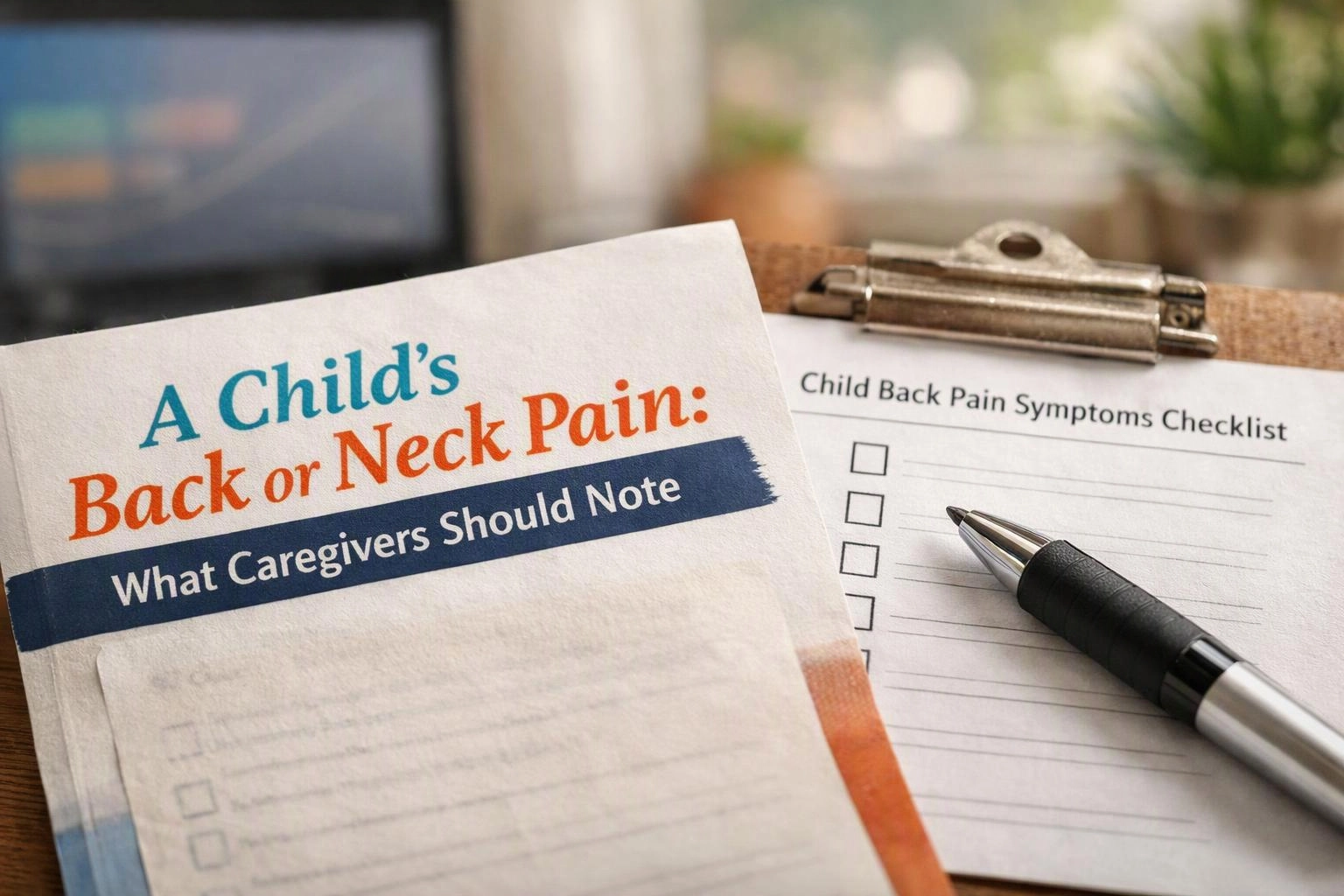
What Should Caregivers Note About a Child’s Back or Neck Pain?
A child back or neck pain record should describe where the pain occurs, when it appears, what changes it, and which other symptoms occur with it.
Child back pain may affect the lower back, upper back, shoulders, or limbs. Child neck pain may feel like stiffness, soreness, or discomfort with movement. We use caregiver observations and symptom history to understand the concern before the examination begins.
Note the pain location and pain intensity in words your child understands. Record whether symptoms follow physical activity, appear at rest, affect sleep, or change with a certain posture.
Before the Evaluation: Record the Child’s Symptoms
A symptom checklist helps caregivers bring clear observations to a pediatric chiropractic evaluation. Record what you see without asking the child to repeat movements that cause pain.
These details help separate a temporary activity-related complaint from a pattern that needs closer attention. Our team reviews the full pattern before deciding whether chiropractic assessment is appropriate.
When Should a Child’s Back or Neck Pain Be Checked Promptly?
A child’s back or neck pain should be checked promptly when it follows a significant injury, worsens, disrupts normal activity, or appears with concerning whole-body or neurologic symptoms.
Prompt medical attention matters when pain is severe, rapidly worsening, or linked with fever. We also want caregivers to report changes in balance, strength, sensation, or bowel and bladder control so the child can receive the right level of evaluation.
When symptoms suggest a need beyond chiropractic assessment, we explain the concern and support clinical referral when appropriate.
Red Flags Caregivers Should Not Ignore
Neurologic symptoms and signs of illness require prompt attention, especially when they occur with back or neck pain.
During the Appointment: Explain What You Observed
A clear symptom timeline helps our team connect the child’s pain description with activity, injury history, and caregiver observations. Bring notes that show what changed and what stayed the same.
Our pediatric consultation includes time for caregiver questions. The more specific the history, the easier it is to choose a safe next step.
What Happens During a Pediatric Chiropractic Evaluation?
A pediatric chiropractic evaluation reviews the child’s history, observes movement and posture, examines relevant musculoskeletal findings, and determines whether chiropractic care is appropriate or whether additional medical evaluation is needed.
We begin with a pediatric chiropractic consultation that includes caregiver questions and the child’s symptom history. We then observe posture and movement in a calm, age-appropriate way.
Our musculoskeletal assessment considers the spine, neck, shoulders, back muscles, and related movement patterns. We do not use a finding from one part of the examination to explain every symptom.
When clinical findings suggest that another form of evaluation is needed, we discuss referral when appropriate. You can learn more about our approach to Pediatric Chiropractic Care.
After the Evaluation: Track Changes Safely
Follow-up observations show how the child responds during normal activities after the evaluation. Record changes without pushing through pain or testing movements repeatedly.
Tracking helps us decide whether the current plan remains suitable. It also gives our team useful information for follow-up care.
How Can Caregivers Support Clear Follow-Up Communication?
Caregivers can support follow-up by sharing specific changes, noting activities that affect symptoms, and asking our team which findings require further evaluation.
A symptom journal can include pain location, pain triggers, sleep disruption, activity changes, and follow-up observations. Use simple descriptions that show what the child could or could not do.
Bring treatment questions to each follow-up visit. Our team can explain which changes fit the care plan and which changes call for additional clinical evaluation.
When Pediatric Chiropractic Care May Be Part of the Evaluation
Pediatric Chiropractic Care may be considered when the child’s symptoms and examination findings suggest a musculoskeletal concern that is appropriate for chiropractic assessment.
Our assessment considers spinal alignment, musculoskeletal health, posture, and child movement. Clinical appropriateness depends on the child’s history, current symptoms, examination findings, and any warning signs.
Arrowhead Clinic Chiropractor Garden City explains the findings in clear terms and helps caregivers understand the next step. Care may be part of the evaluation when the presentation is suitable, while referral remains important when symptoms require another form of medical assessment.
Questions About a Child’s Back or Neck Pain
What should I tell a chiropractor about my child’s back pain?
Arrowhead Clinic Chiropractor Garden City needs the child’s symptom timeline, pain location, pain description, activity history, injury history, medical history, and caregiver observations.
Can a child’s activity level help explain back or neck pain?
Yes, a child’s activity level can help explain symptoms by showing whether pain follows sports, play, prolonged sitting, a fall, or another physical demand.
What information should caregivers bring to a pediatric chiropractic appointment?
Caregivers should bring a symptom checklist, relevant medical history, injury history, current health information, and notes about movement, activity, sleep, and symptom changes.
Share your child’s back or neck pain concerns and symptom notes with Arrowhead Clinic Chiropractor Garden City so our team can discuss the appropriate evaluation pathway.
Get a Free Estimate