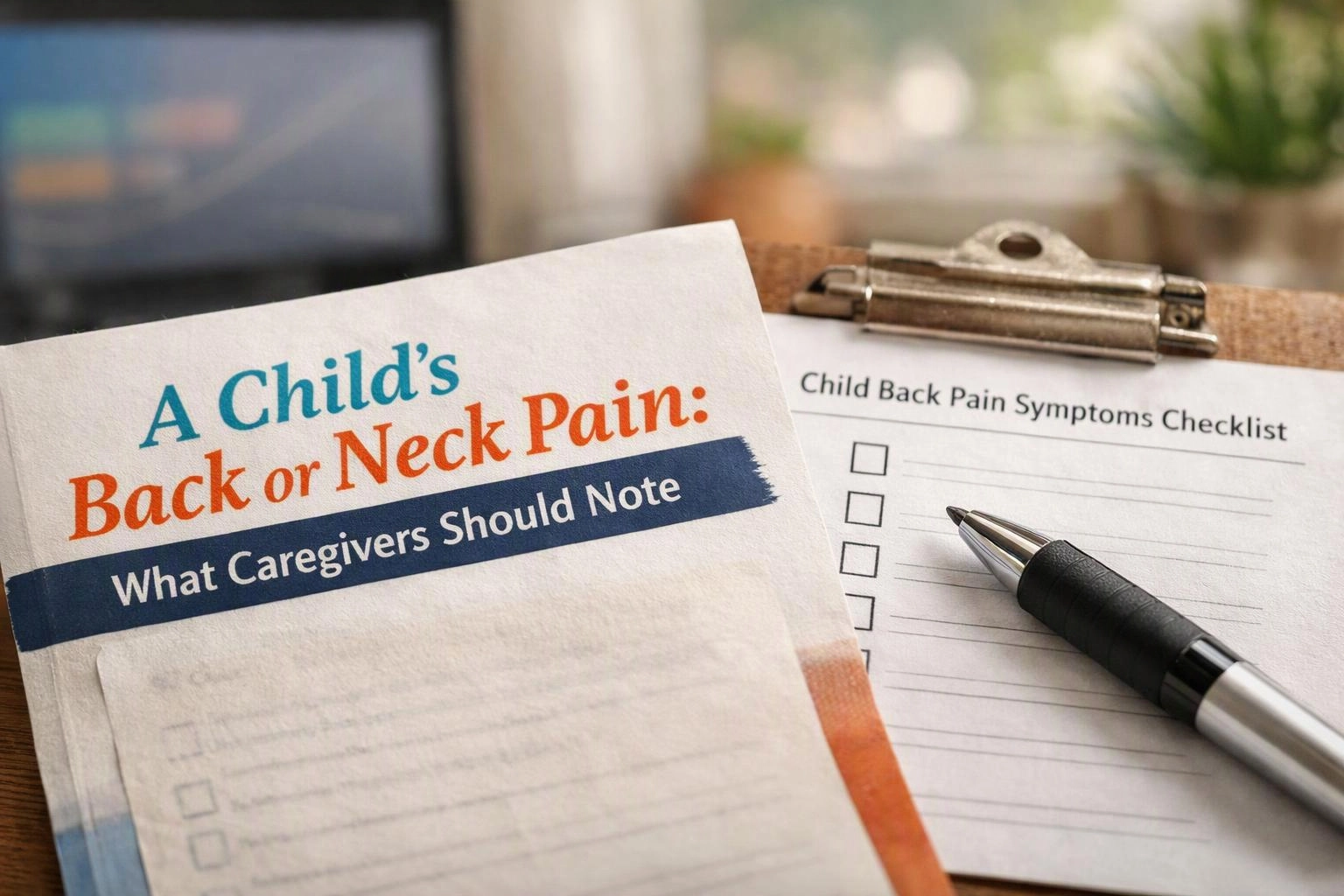
A Child’s Back or Neck Pain: What Caregivers Should Note
A child’s back or neck pain deserves attention to where it hurts, what brings it on, and any changes in movement or health. Seek emergency care for severe symptoms such as new weakness, trouble controlling the bladder or bowels, or pain after serious injury. Arrowhead Clinic Chiropractor Garden City offers Pediatric Chiropractic Care, but warning signs need medical evaluation. We offer upfront pricing.
Request an EstimateWhat should caregivers note about a child’s pain?
Caregivers should note where the child hurts, what changes the pain, and any other symptoms. These notes can help a doctor or our team understand the concern.
When does a child need emergency care?
A child needs emergency care for back or neck pain with new weakness, trouble walking, or loss of bladder or bowel control. Pain after a serious injury also needs emergency evaluation. Fever with a stiff neck needs emergency evaluation as well.
Go to an emergency department for these warning signs. Don’t wait for a chiropractic assessment.
When should a child’s pain be checked by a doctor?
A child’s back or neck pain should be checked by a doctor if it persists, worsens, or interrupts sleep. Pain with fever or pain after an injury also needs medical advice. If your child seems ill without a clear cause, contact their doctor.
Share your symptom notes during the pediatric medical evaluation. Seek emergency care for the warning signs above.
What can cause back or neck pain in children?
A child’s back or neck pain can come from muscle strain or injury, but other medical conditions can also cause it. Sports, posture, and other activities may affect the back muscles and neck.
Scoliosis, an abnormal curve in the spine, is another possible concern. Infection and other medical conditions can also cause pain. Symptoms alone can’t establish the cause, so a medical evaluation may be needed.
What can caregivers do while arranging care?
Caregivers can help a child avoid activities that worsen pain and keep notes about symptoms. Let your child move comfortably without pushing through pain. Don’t force a stretch or try to manipulate your child’s spine.
Keep track of any new symptoms while you arrange care. If an emergency warning sign appears, seek emergency evaluation.
Where can pediatric chiropractic care fit?
Pediatric Chiropractic Care may be considered for a child’s back or neck pain after urgent concerns are addressed. We review symptoms and health history to help decide whether chiropractic care is appropriate.
Our assessment considers your child’s age and symptoms. We refer for medical evaluation when needed.
Contact Arrowhead Clinic Chiropractor Garden City to discuss your child’s symptoms and whether an assessment may be appropriate. Seek medical care first when warning signs are present.
Request a QuoteWhat Are the Key Specifications to Know?
- Topic Focus
- A Child’s Back or Neck Pain: What Caregivers Should Note
- Related Core Service
- Chiropractor
- Evaluation Method
- On-Site Inspection & Written Scope
- Compliance Standard
- Local Building Code & Manufacturer Specs
How Does the Evaluation & Execution Process Compare?
| Evaluation Stage | Technical & Quality Criteria | Timeline Checkpoint |
|---|---|---|
| Initial Diagnostic & Assessment | Identify root cause, site constraints & code requirements | Before any work begins |
| Written Scope & Option Comparison | Compare repair vs. replacement tiers & material grades | Prior to project approval |
| Code-Compliant Execution | Follow manufacturer specs & local permitting standards | During active service |
| Final Verification & Walkthrough | Verify installation alignment, performance & clean site handoff | Upon project completion |
Related Resources
Spinal Decompression vs. Chiropractic Adjustment: Which Is the Better Fit?
Everything About ItChiropractor vs. Physical Therapist for Back Pain: How to Choose
Everything About ItChiropractor vs. Physical Therapy for Sciatica: Choosing a Starting Point
Everything About ItChiropractor vs. Physical Therapist for Neck Pain: What to Compare