
What Is the Spinal Cord?
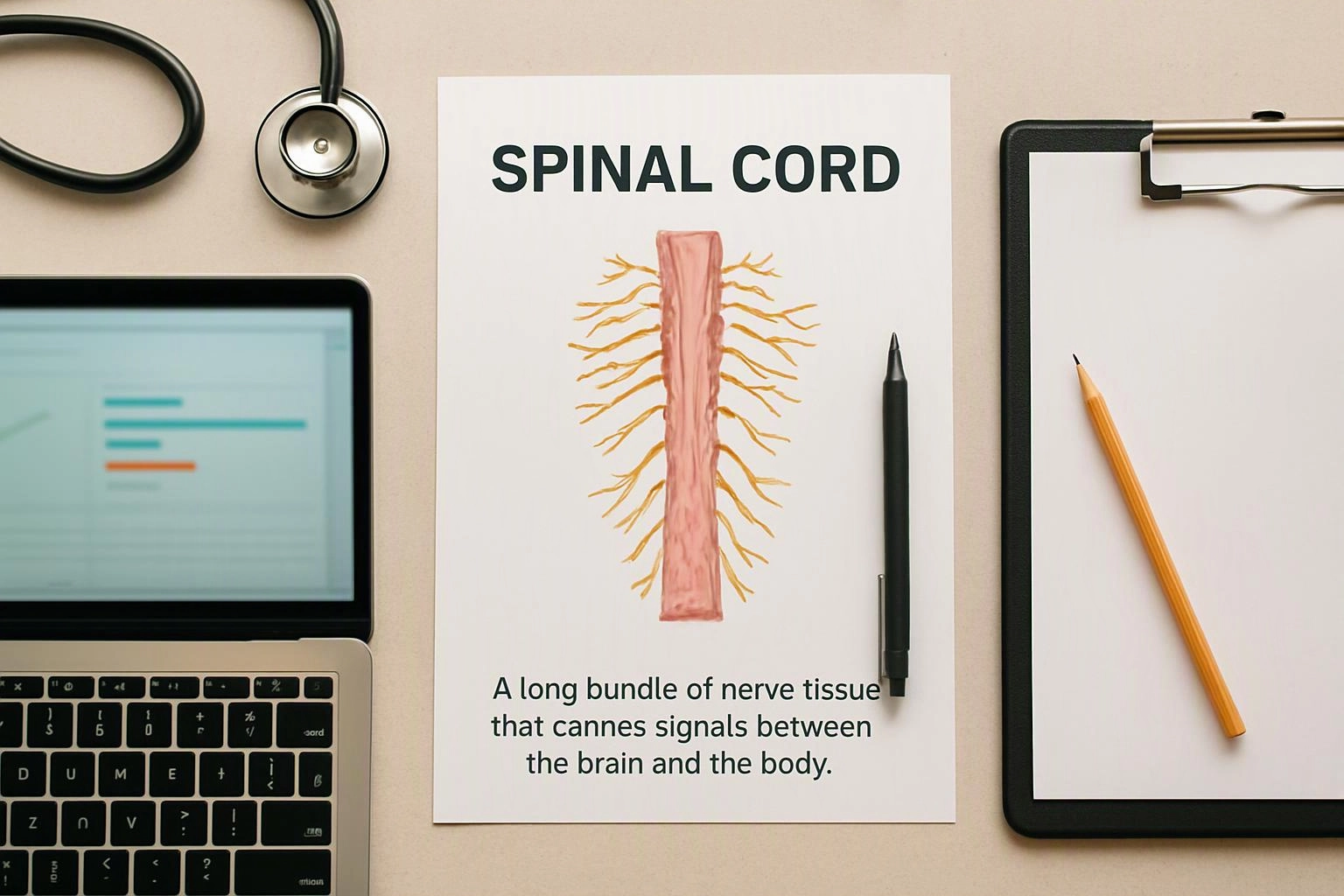
Spinal Cord is a long bundle of nerve tissue that carries signals between the brain and the rest of the body. It runs through the spinal canal and connects with nerves that control movement, sensation, and many automatic body functions. The spinal cord forms a central pathway within the nervous system.
Quick Facts About Spinal Cord
Category
Central nervous system structure
Used for
Sending signals between brain and body
Common confusion
Not the same as the spinal column
Also called
Spinal cord tissue
Often discussed with
Spinal Decompression Therapy
Key Takeaways About Spinal Cord
- It is nerve tissue, not a vertebra or spinal disc.
- The spinal canal surrounds and protects the cord.
- Spinal cord and spinal nerves are related but different structures.
How Spinal Cord Works
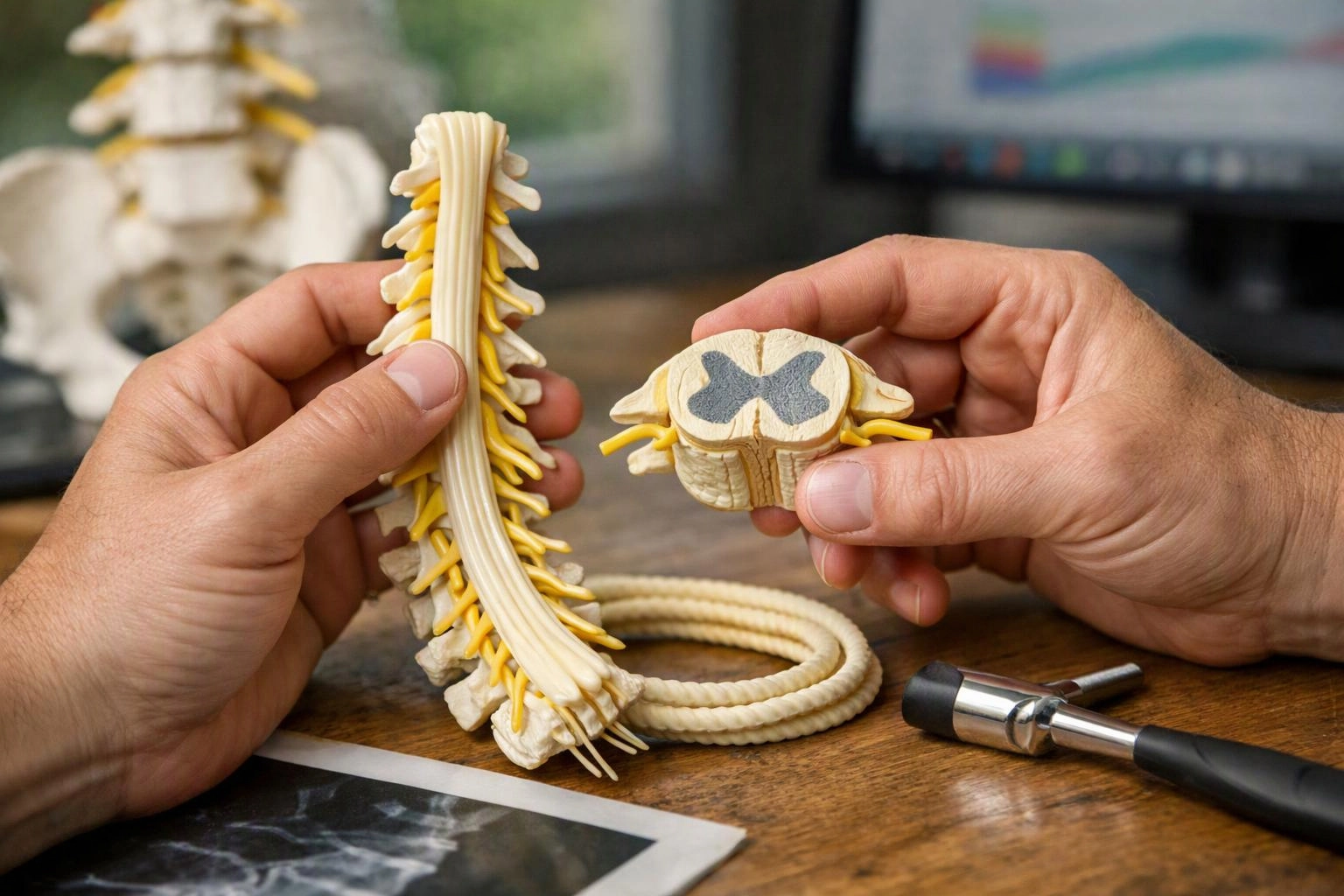
The Spinal Cord carries electrical and chemical messages through nerve pathways. Signals traveling downward help the brain guide movement. Signals traveling upward provide information about touch, temperature, pressure, and body position. Local nerve connections also support automatic functions.
Related glossary terms: Cervical Spine, Thoracic Spine, Lumbar Spine.
The cord sits inside the spinal canal, which is formed by connected vertebrae. Nerve roots branch from the cord and pass through openings between vertebrae to reach other parts of the body. A disc problem, narrowing around the canal, or direct trauma can affect nearby nerve tissue. Spinal decompression therapy focuses on changing mechanical loading around the spine, while clinical decisions should account for the cord, nerve roots, discs, and symptoms together.
From the Arrowhead Clinic Chiropractor Garden City team
When we discuss spinal decompression therapy, we consider the spinal cord within the larger spinal canal and nervous system. We review the person’s symptoms and relevant history before deciding whether the service fits the clinical picture. We also distinguish cord-related concerns from issues involving discs, joints, or nerve roots.
Spinal Cord in Practice: A Real-World Example
A person with back discomfort may ask whether spinal decompression therapy acts directly on the spinal cord. The service addresses mechanical forces around the spine, so the team considers nearby discs, joints, nerve roots, and reported symptoms during planning.
Related Services
Related Terms
Cervical Spine
Cervical Spine is the upper section of the spinal column that supports the head and connects…
Thoracic Spine
Thoracic Spine is the middle section of the spinal column between the neck and lower back…
Lumbar Spine
Lumbar Spine is the lower section of the spinal column between the thoracic spine and the…
Nerve Root
A nerve root is the portion of a spinal nerve that branches from the spinal cord…
Arrowhead Clinic Chiropractor Garden City
Have Questions About Spinal Cord?
Contact Arrowhead Clinic Chiropractor Garden City for practical guidance on Spinal Cord and related chiropractor work in Garden City.