
What Is a Calorie Deficit?
A calorie deficit is a gap created when the body uses more energy than it receives from food and drinks over time. The body may draw on stored energy to meet its needs. Medical weight loss plans may track this balance alongside food choices, activity, appetite, health history, and other factors that affect weight management.
Quick Facts About Calorie Deficit
Category
Weight management concept
Used for
Planning energy balance
Common confusion
Not identical to meal restriction
Also called
Energy deficit
Often discussed with
Medical Weight Loss
Key Takeaways About Calorie Deficit
- Energy balance, not a specific food, defines the concept.
- Food intake and activity both affect the balance.
- A calorie deficit is not the same as skipping meals.
How Calorie Deficit Works

A calorie deficit occurs when energy intake stays below energy use over time. Food and drinks provide energy, while the body uses energy for basic functions, movement, digestion, and daily activity. The balance can change when eating patterns, activity, body composition, or appetite changes.
Related glossary terms: Metabolic Rate, GLP-1 Medication, Weight-Bearing Exercise.
Medical weight loss care may use this concept to review whether a plan supports the person's goals and health needs. Medical Weight Loss can include discussion of food patterns, movement, appetite, and health history. A deficit does not describe food quality by itself, so a balanced plan still considers nourishment and long-term consistency.
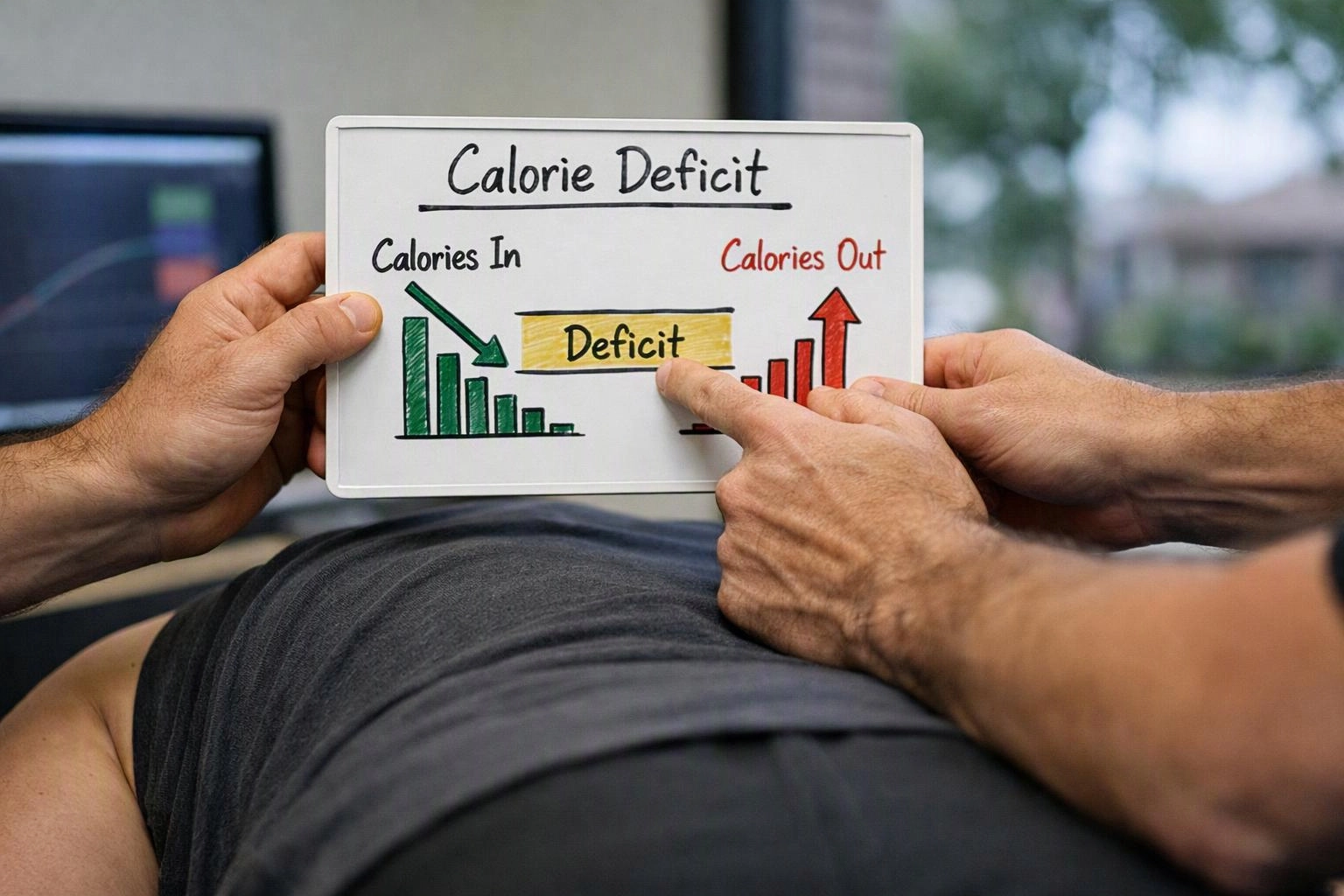
From the Arrowhead Clinic Chiropractor Garden City team
When we discuss a calorie deficit during Medical Weight Loss visits, we review eating patterns, activity, appetite, and relevant health factors together. Our team treats the deficit as one part of a broader assessment, because the same eating pattern can affect people differently.
Calorie Deficit in Practice: A Real-World Example
A person receiving Medical Weight Loss support may review meals, daily movement, appetite, and health history with our team. The resulting plan may aim to create an appropriate energy gap while supporting regular eating and practical routines.
Related Services
Related Terms
Metabolic Rate
A metabolic rate is the speed at which your body uses energy to support basic functions…
GLP-1 Medication
GLP-1 Medication is a prescription treatment that acts on pathways linked to appetite, digestion, and blood…
Weight-Bearing Exercise
Weight-bearing exercise is physical activity performed while your body supports its own weight through the feet…
Arrowhead Clinic Chiropractor Garden City
Have Questions About Calorie Deficit?
Contact Arrowhead Clinic Chiropractor Garden City for practical guidance on Calorie Deficit and related chiropractor work in Garden City.